










Breaking News
 4 Flashlights Every Prepper Needs
 UAE Cuts Ties As Iran Warns Gulf States Against Helping Washington;
 Farm Expenses Climb Again: US Production Costs Hit $490.3B in 2025, Says USDA
 NYSE-Listed AI Company Taps Lightning Network to Pay Employees In Bitcoin
Top Tech News
 Polaris injects pneumatic shifting into expedition-grade side-by-side
 NEW HOMES ARE BUILT WITH THIS AND IT'S MAKING YOU SICK
 S3E33: I Beat the Attorney General. No Lawyers. My Legal Team Was AI
 World's largest all-electric plane completes maiden flight
 The Lucid Cosmos Will Have More Range Than Any Tesla
 Strong 3D printable elastic polymer resists damage
 Double hydrogen-combustion car breaks world land speed record
 Vitalik Buterin Says Ethereum Is Betting Its Future On Quantum Security And AI
 Everything You Wanted To Know About Building A Cheap AI Setup (That Still Works)...
 If They Were Human, They'd Be Arrested. Experts Respond To Rogue AI Breaches



Can India Become the Next Factory of the World?
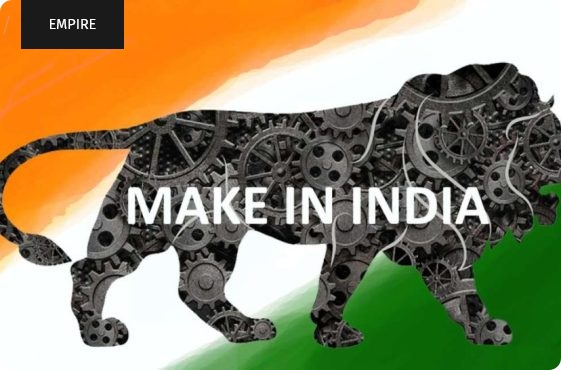
It was a strategic effort to transform India from a nation known primarily for services into a manufacturing powerhouse capable of challenging China's dominance over global supply chains.
That ambition deserves far more attention than it receives. When Make in India was launched in 2014, manufacturing represented roughly 16% of India's economy. The objective was straightforward: attract foreign investment, build domestic industry, expand exports, and create millions of skilled jobs for one of the world's youngest populations. Since then, New Delhi has introduced production incentives across electronics, pharmaceuticals, automobiles, semiconductors, renewable energy, defense, telecommunications, and numerous other strategic industries.
The government has approved hundreds of manufacturing projects under its Production Linked Incentive (PLI) programs covering fourteen major sectors. According to India's Ministry of Commerce, these programs have generated more than ?2.16 lakh crore in investment and over 1.4 million direct and indirect jobs.
No country has tried to build industrial capacity on this scale in decades. The greatest success has undoubtedly been electronics. India has become the world's second-largest producer of mobile phones after barely existing in that market only a decade ago. Apple, Foxconn, Samsung, Tata Electronics, and numerous suppliers continue expanding production throughout the country. The government this week approved another ?62,500 crore program aimed specifically at increasing mobile phone manufacturing, exports, and employment. That demonstrates New Delhi has no intention of slowing its industrial strategy.