










Breaking News
 Portable 1MW Kaleidos Microreactor Secures Critical Nuclear Fuel Deal Through 2030s
 Family Structure Determines Kids' Success In School More Than Race Or Income, Researchers Say
 Turkey & Israel On Brink Of Military Clash After Netanyahu Ordered Strikes On Syrian Airbase
 Georgia Refuses To Adopt EU Sanctions On Iran Citing 'National Interests'
Top Tech News
 High-voltage sodium home battery emerges as affordable rooftop solar solution
 Peter Thiel-Funded Company Anduril to Triple the Number of Autonomous Surveillance...
 China has released Origin Pilot, claimed to be the world's first open-source operating system...
 ShieldAI XBAT Drone Fighters Can Give A Fighter Drone Wing to Every US Destroyer
 Brain organoids, kept alive more than five years, matured like human brains
 Parkinson's patient's tremors VANISH within minutes of GROUNDBREAKING treatment
 Polaris injects pneumatic shifting into expedition-grade side-by-side
 NEW HOMES ARE BUILT WITH THIS AND IT'S MAKING YOU SICK
 S3E33: I Beat the Attorney General. No Lawyers. My Legal Team Was AI
 World's largest all-electric plane completes maiden flight


The Federal Reserve's Independence Is an Illusion
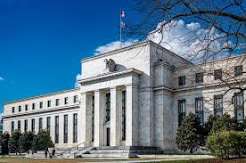
The claimed separation lets both institutions share credit when policy succeeds and deflect blame onto each other when it fails, disguising the Fed's core political function of financing the government.
The following article was originally published by the Mises Institute. The opinions expressed do not necessarily reflect those of Peter Schiff or SchiffGold.
Treasury Secretary Scott Bessent recently took to X to celebrate what he called one of the "highlights of the Warsh Fed." His post didn't have anything to do with what kind of monetary policy a Warsh-chaired Fed will do. It was about the humiliation of mainstream financial journalists—which is fine by me, but let me digress on "Fed independence" between mouthfuls of popcorn.
According to Bessent, Fed reporters such as the Wall Street Journal's Nick Timiraos have been "reduced to reporting Fed backroom gossip because they're incapable of performing real economic or monetary policy analysis without being spoon-fed."
Timiraos had reported on Bessent's attempt to persuade the Federal Reserve to expand its Foreign and International Monetary Authorities Repo Facility (FIMA), so that Japan could obtain more dollars against its holdings of US Treasury securities. Japan could then sell those dollars for yen, boosting demand for its own currency without having to sell Treasurys.
The FIMA repo facility allows approved foreign official institutions to temporarily exchange Treasury securities for dollars. Japan wants to use the facility to get dollars to purchase yen and reverse its recent sharp decline against the dollar. The problem is that the Fed facility has a $60 billion per-counterparty borrowing cap. Bessent wants the Fed to raise that limit.
Japan could finance an intervention by selling some of its Treasury securities. But this would cause US Treasury yields to increase, and they are already too high in the Treasury's view. By borrowing from the Fed instead, Japan can get the dollars it wants without selling Treasurys. This explains Bessent's actions.
Timiraos described Bessent's request as an early test of how Fed chairman Kevin Warsh would draw the line between the central bank and the administration that appointed him. That is a reasonable question. An expansion of the facility would require Fed approval, but the policy objective is clearly a part of the administration's foreign-exchange and debt-management goals.
Instead of doing the predictable thing by ignoring Timiraos or diplomatically responding to him with a platitudinous non-answer, Bessent attacked the reporter for raising the question.
"Cooperation" and "Coordination"
The conventional story is that the Federal Reserve is independent of the Treasury and that the decisive break came with the Treasury-Fed Accord of 1951. Before the accord, the Fed held interest rates down to facilitate government borrowing. Afterward, it was supposedly liberated to pursue monetary policy without regard to the government's financing needs.
That history is a myth.
The accord did not establish a boundary between the Fed and the Treasury. The officials involved repeatedly described their relationship in terms of "cooperation" and "coordination." Treasury secretary John Snyder would not even concede that the Fed has ultimate authority over interest rates. When pressed by Senator Paul Douglas, Snyder said that the final decision on interest rates could only be made by the Treasury. Fed and Treasury officials would, he assured Congress, "work out cooperation."