










Breaking News
 Weekly Recap August 23, 2026
 Saylor's Strategy Launches 'USD Cash' Pool After $2 Billion Raise, No BTC Buys
 Christian Westbrook (Ice Age Farmer): Water, Energy, Future
 Texas AG Ken Paxton is investigating avocado oil products over deceptive marketing...
Top Tech News
 High-voltage sodium home battery emerges as affordable rooftop solar solution
 Peter Thiel-Funded Company Anduril to Triple the Number of Autonomous Surveillance...
 China has released Origin Pilot, claimed to be the world's first open-source operating system...
 ShieldAI XBAT Drone Fighters Can Give A Fighter Drone Wing to Every US Destroyer
 Brain organoids, kept alive more than five years, matured like human brains
 Parkinson's patient's tremors VANISH within minutes of GROUNDBREAKING treatment
 Polaris injects pneumatic shifting into expedition-grade side-by-side
 NEW HOMES ARE BUILT WITH THIS AND IT'S MAKING YOU SICK
 S3E33: I Beat the Attorney General. No Lawyers. My Legal Team Was AI
 World's largest all-electric plane completes maiden flight


This "Aircrete" Dome Builds in 1 Week and Resists Fire. Why Was It Banned?
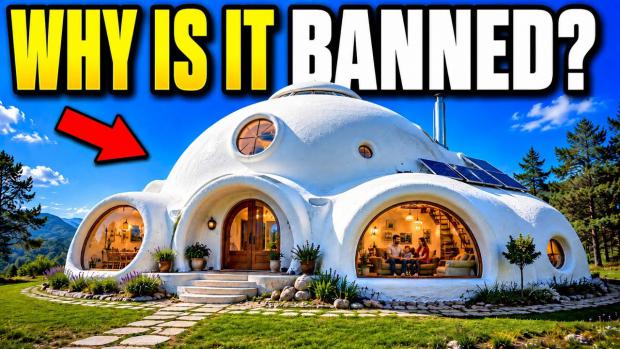
You can build this fireproof dome home in exactly one week, for a fraction of the cost of a normal house. It survives earthquakes, repels pests, and won't burn.
It's made of Aircrete—a DIY mix of cement and dish soap foam that traps millions of tiny air bubbles to create lightweight, indestructible blocks.
It sounds like the ultimate cheat code to the housing crisis. So why is it practically illegal to build one?
The truth isn't that Aircrete is dangerous. It's that the system wasn't built for it. From outdated local building codes that only understand wood and drywall, to a trillion-dollar construction industry that doesn't want you pouring your own cheap walls, getting a dome approved is an absolute nightmare.
Here is exactly how these week-long builds work, and the hidden reasons city planners keep shutting them down.
So let's get into it. What exactly is Aircrete, and why does something this simple have people convinced it could fix the housing crisis?
At its core, Aircrete is not some rare, patented material you need a factory to produce. It's just three ingredients you can buy at any hardware store. Portland cement, water, and a foaming agent. That foaming agent can be a commercial concentrate designed for lightweight concrete, or in its most DIY form, plain dish soap run through a small air compressor and a foam generator built out of PVC pipe.
Here's the trick. You whip that soap and water into a shaving-cream-like foam, almost like a bubble bath on steroids. Then you fold that foam into a cement slurry. The foam doesn't dissolve. It survives the mixing process and gets locked into the cement as it cures, leaving behind millions of microscopic air pockets suspended evenly throughout the material. The result is a block or wall that can be one third, or even one tenth, the density of standard concrete, while still holding its shape and strength.