










Breaking News
 Nuclear Fusion is Closer Than You Think - THIS Is Why
 Enes Freedom Just Dropped the Gloves on the WNBA -- Biological Reality Is Not Optional
 The Marxist Iron Curtain Descends: How Democrat-Controlled Blue States Lock in Permanent Power...
 Bribery, Kickbacks, and Fake Research: Study Exposes the Dark Side of Pharma
Top Tech News
 Portable 1MW Kaleidos Microreactor Secures Critical Nuclear Fuel Deal Through 2030s
 This New All-In-One Range Extender Is Ready To Go Into Any Electric Truck
 Aptera Reveals The Secret To Building Its Solar EV: China
 High-voltage sodium home battery emerges as affordable rooftop solar solution
 Peter Thiel-Funded Company Anduril to Triple the Number of Autonomous Surveillance...
 China has released Origin Pilot, claimed to be the world's first open-source operating system...
 ShieldAI XBAT Drone Fighters Can Give A Fighter Drone Wing to Every US Destroyer
 Brain organoids, kept alive more than five years, matured like human brains
 Parkinson's patient's tremors VANISH within minutes of GROUNDBREAKING treatment
 NEW HOMES ARE BUILT WITH THIS AND IT'S MAKING YOU SICK


China Moon mission to find water ice: unlike anything NASA's done
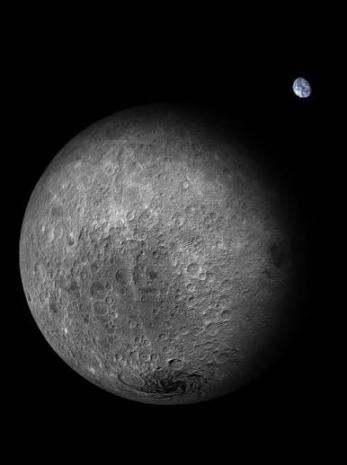
How do you explore a place where the Sun never shines?
China's space program will soon embark on one of the most innovative lunar exploration missions in recent years. We've known for nearly two decades that some form of water exists on the Moon. What we still don't know is exactly how much accessible water ice lies inside permanently shadowed craters, how deeply it is buried or what form it takes.
What we do know is that accessing that water ice will be a real challenge: it is found at the bottom of deep, hard-to-traverse craters where the Sun never shines, remaining untouched for billions of years at temperatures well below –200°C. These are among the most valuable places on the Moon, but the hardest to reach and explore.
Lunar exploration has come a long way since the Soviet Union's Luna-1 probe reached the Moon's vicinity in January 1959. The Apollo missions and their successors showed that the challenge is no longer simply to reach the Moon. It is to explore places human and conventional rovers cannot easily go, and ultimately determine whether the Moon itself can provide some of the resources that future explorers will need.
China has spent two decades building an increasingly ambitious lunar exploration program, named after Chang'e, the ancient Chinese goddess of the Moon. The Chang'e-7 mission is expected to set course for our celestial neighbor later this month, although a recent failure involving a different Chinese rocket has introduced some uncertainty over the launch date. Here's what makes this latest mission so interesting.
What is Chang'e-7 set to achieve?
The mission will test several novel approaches to lunar exploration. It will consist of an orbiter, a lander, a rover and a hopper.
In addition, the Queqiao-2 lunar relay satellite is already in place. Launched separately in March 2024, it subsequently supported the Chang'e-6 mission and will facilitate communication between Earth and the lunar surface during the Chang'e-7 mission.
We don't know precisely where the mission will land, but a site on or near an illuminated ridge close to the Shackleton crater in the Lunar South Pole's Aitken region is a prime candidate.
The hopper will be the mission's real star. Unlike a wheeled rover, it's designed to leap over broken terrain and descend into craters where sunlight never reaches – places that conventional vehicles may simply be unable to enter.