










Breaking News
 Moody's Downgrades Baltimore City's Credit Rating Amid Population Collapse
 WNBA's most glamorous player Cameron Brink explodes at 'piece of s***' Enes Kanter Freed
 Taiwan Passes Massive $7,560,000,000 Drone Plan As China Threat Looms
 White House Ditches Outdated Climate Nightmares For Real-World Policy...
Top Tech News
 Singapore is experimenting with biological computing using living human neurons...
 It's Happening - Europe is Building an Impossible Fusion Reactor
 Portable 1MW Kaleidos Microreactor Secures Critical Nuclear Fuel Deal Through 2030s
 This New All-In-One Range Extender Is Ready To Go Into Any Electric Truck
 Aptera Reveals The Secret To Building Its Solar EV: China
 High-voltage sodium home battery emerges as affordable rooftop solar solution
 Peter Thiel-Funded Company Anduril to Triple the Number of Autonomous Surveillance...
 China has released Origin Pilot, claimed to be the world's first open-source operating system...
 ShieldAI XBAT Drone Fighters Can Give A Fighter Drone Wing to Every US Destroyer
 Brain organoids, kept alive more than five years, matured like human brains



White House Planning to Reactivate Civil War-Era Court to Accelerate Theft of Iranian Oil
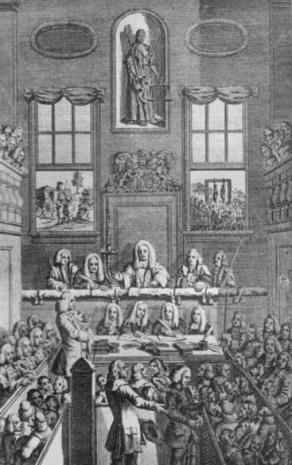
The US Justice Department is preparing to reactivate prize courts to "adjudicate the disposition of [Iranian] captured vessels and cargo."
Bloomberg reported speaking with an attorney working with the Justice Department on reviving the court. "Our national security interests may require the United States military to seize vessels or cargo supporting the enemy during military conflict," Aaron Reitz, a Houston-based attorney, said in a statement. "If that happens, our federal courts must be ready to adjudicate the disposition of these captured vessels and cargo."
He described prize courts as an "ancient body of maritime law."
Maritime lawyers and former prosecutors told Bloomberg they anticipate "ship owners and Iranian terrorism victims" to be among the plaintiffs filing with the prize court to receive funds generated by selling off seized Iranian oil.
While US officials and politicians often label Iran as the leading state-sponsor of terror, many of the alleged terror attacks that Tehran has ordered have been debunked, such as Iran supplying EFPs during the Iraq War and the Kohbar Towers attack.
During the Civil War, the US Navy captured merchant vessels as prizes during the blockade of the South. The Confederacy also allowed privateers to keep captured northern ships as prizes.
Allison Luzwick, an attorney specializing in maritime law, said the DOJ may struggle to use the prize court to seize Iranian oil, as international law has significantly developed since it was last used. "This really is a historical area of law that is not tested in modern times." She added, "Great strides have been made in international law and the law of war since the late 1800s, and all of that is going to come into play when we're actually looking at proceedings involving a vessel that is potentially seized under Prize Act authority."
The planning to reactivate prize courts comes as President Donald Trump is shifting his approach to the war against Iran. This week, Secretary of State Marco Rubio told allies that the US was not planning additional strikes against Iran, and would be focusing on implementing the blockade and sanctions.
Since Trump imposed the blockade earlier this year, the US has captured and disabled multiple vessels attempting to reach or exit Iranian ports.