










Breaking News
 Moody's Downgrades Baltimore City's Credit Rating Amid Population Collapse
 WNBA's most glamorous player Cameron Brink explodes at 'piece of s***' Enes Kanter Freed
 Taiwan Passes Massive $7,560,000,000 Drone Plan As China Threat Looms
 White House Ditches Outdated Climate Nightmares For Real-World Policy...
Top Tech News
 Singapore is experimenting with biological computing using living human neurons...
 It's Happening - Europe is Building an Impossible Fusion Reactor
 Portable 1MW Kaleidos Microreactor Secures Critical Nuclear Fuel Deal Through 2030s
 This New All-In-One Range Extender Is Ready To Go Into Any Electric Truck
 Aptera Reveals The Secret To Building Its Solar EV: China
 High-voltage sodium home battery emerges as affordable rooftop solar solution
 Peter Thiel-Funded Company Anduril to Triple the Number of Autonomous Surveillance...
 China has released Origin Pilot, claimed to be the world's first open-source operating system...
 ShieldAI XBAT Drone Fighters Can Give A Fighter Drone Wing to Every US Destroyer
 Brain organoids, kept alive more than five years, matured like human brains



White House Ditches Outdated Climate Nightmares For Real-World Policy...
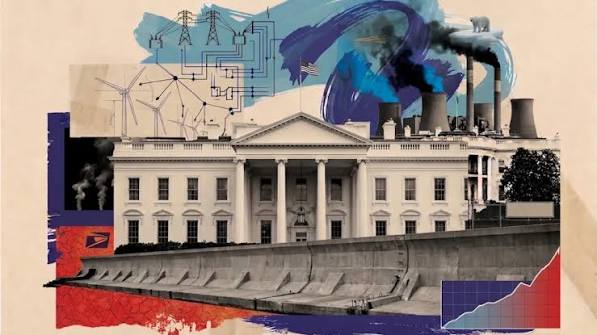
The White House is ditching outdated guidelines based on worst-case climate change scenarios, The Daily Wire can first report.
The U.S. Global Change Research Program is set to publish an amendment to the Fifth National Climate Assessment on Tuesday, an amendment clarifying that the U.S. government's congressionally mandated report on climate change impacts and risks, is now retired. That report was published in 2023 and was based on the worst-case scenarios for climate change — not actual scenarios the world is facing.
It is a significant move given that the report massively affects economic and regulatory rules, federal research and grant funding, and the budgeting of millions of dollars and infrastructure misallocation. Planning for dramatic climate change can impact how local governments build power grids, enforce zoning, build sea walls, and more.
With this new amendment, the White House is instructing agencies that any findings or projections that are specifically based on worst-case scenarios should include disclaimers or warnings that they originated this way. The White House will also prohibit worst-case scenario projections from serving as the baseline prediction for funding decisions or regulation or infrastructure decisions.
Dr. Matthew Wielicki, the director of the U.S. Global Change Research Program, explained that the move is intended to ensure that the federal government's principal climate assessment "reflects current scientific understanding." Tuesday's announcement brings back the national climate assessment into a scientific realm that is plausible, he said, and not scenarios that were totally implausible, as the scientific community now admits.
"This all changed in April of this year when the climate community admitted that the high emission scenarios were no longer plausible, realistic futures," Wielicki shared in a phone interview with The Daily Wire on Monday. "This had been bounced around by the scientific community for quite a while, that this kind of high-emission scenarios were stress tests for the climate models, but somehow, over time, they became kind of the business as usual idea."
"They were the expected futures that a lot of policy was being made upon," he continued. "And if you look at the last national climate assessment, NCA5, a lot of the impact statements, if not even a majority, in many chapters rely on these now implausible scenarios to kind of inform policymakers about how to respond to climate change. If your informed response is based on a scenario that's no longer plausible, you don't make good decisions."
Federal agencies have been making policy and funding decisions based on these extreme, worst-case climate models, a copy of the "Proposed Amendment to the Fifth National Climate Assessment (NCA5)" states. United Nations Intergovernmental Panel on Climate Change had already reached a similar conclusion, so Tuesday's move clarifies the national climate assessment will be based on plausible scenarios going forward.