










Breaking News
 800-passenger commercial plane boldly reinvents how we will fly
 Partial lunar eclipse stuns skywatchers with an 'almost blood moon'. Here are the best photo
 The US Treasury is trying to keep the bond market from collapsing the economy and bringing in SHTF.
 What to Do When a Jar Breaks During Canning
Top Tech News
 Singapore is experimenting with biological computing using living human neurons...
 It's Happening - Europe is Building an Impossible Fusion Reactor
 Portable 1MW Kaleidos Microreactor Secures Critical Nuclear Fuel Deal Through 2030s
 This New All-In-One Range Extender Is Ready To Go Into Any Electric Truck
 Aptera Reveals The Secret To Building Its Solar EV: China
 High-voltage sodium home battery emerges as affordable rooftop solar solution
 Peter Thiel-Funded Company Anduril to Triple the Number of Autonomous Surveillance...
 China has released Origin Pilot, claimed to be the world's first open-source operating system...
 ShieldAI XBAT Drone Fighters Can Give A Fighter Drone Wing to Every US Destroyer
 Brain organoids, kept alive more than five years, matured like human brains



The Entire Financial System Is Chained to Government Debt
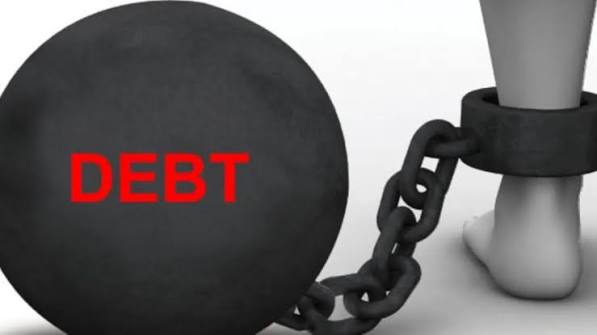
That is sanitized bureaucratic language for a system in which governments, banks, pension funds, insurers, hedge funds, and central banks are all chained to the same mountain of sovereign debt. If government bonds begin to fail, the losses will not remain confined to some account at the Treasury. They will spread through the institutions holding the public's savings and eventually force central banks to choose between the currency and the financial system.
Government debt is treated as the foundation of modern finance. Banks use sovereign bonds as collateral, pension funds hold them to match future obligations, insurers depend on them for income, and hedge funds trade them using enormous leverage through repurchase markets. Regulators assign government debt privileged treatment because they have declared it "risk-free," but no investment is free of risk. The label exists because government needs financial institutions to purchase its bonds, and admitting that sovereign debt can become unstable would expose the fraud supporting the entire system.
The BIS estimates that the probability of a financial-stress event comparable to the Global Financial Crisis occurring within three months is roughly ten times higher when public debt relative to GDP is elevated. The probability rises from approximately 0.3% under lower-debt conditions to 3.8% when government debt is high. The risk increases further when nonbank financial institutions hold a larger share of the market because many depend on leverage and short-term funding that can disappear the moment bond prices move against them.
This is how a routine selloff can become a systemic event. Government bonds decline, yields rise, and leveraged funds suffer losses. Lenders demand additional collateral, forcing those funds to sell more securities into a falling market. Liquidity disappears, borrowing costs surge, and the losses spread to banks and other institutions connected through funding markets. Government then complains that the market is "dysfunctional" because investors are no longer purchasing its debt at politically convenient prices.
The central bank is forced to intervene because allowing the bond market to clear naturally could bring down the financial system. It purchases government securities, supplies emergency liquidity, and claims that the operation is temporary and has nothing to do with financing the state. Yet every rescue teaches the market that excessive leverage will be protected and teaches politicians that reckless borrowing carries no immediate consequence. This creates the next crisis by encouraging the exact behavior that caused the first one.
The BIS openly admits that repeated central-bank interventions can weaken market discipline over government spending. This is the vicious circle they cannot escape. Governments borrow excessively, bond markets become unstable, central banks suppress the instability, and politicians interpret the rescue as permission to borrow even more. The debt increases until each attempt to restore honest interest rates threatens the banks, pensions, and funds that were encouraged to hold it.