










Breaking News
 Bear trap: Russia is running out of good options in Ukraine
 The geopolitical imperative for a self-reliant South Korea
 Six months into Iran war, hard-liners tighten grip as Tehran prepares for prolonged US confrontation
 Viewers saying from Nepal ..
Top Tech News
 Singapore is experimenting with biological computing using living human neurons...
 It's Happening - Europe is Building an Impossible Fusion Reactor
 Portable 1MW Kaleidos Microreactor Secures Critical Nuclear Fuel Deal Through 2030s
 This New All-In-One Range Extender Is Ready To Go Into Any Electric Truck
 Aptera Reveals The Secret To Building Its Solar EV: China
 High-voltage sodium home battery emerges as affordable rooftop solar solution
 Peter Thiel-Funded Company Anduril to Triple the Number of Autonomous Surveillance...
 China has released Origin Pilot, claimed to be the world's first open-source operating system...
 ShieldAI XBAT Drone Fighters Can Give A Fighter Drone Wing to Every US Destroyer
 Brain organoids, kept alive more than five years, matured like human brains



Partial lunar eclipse stuns skywatchers with an 'almost blood moon'. Here are the best photo
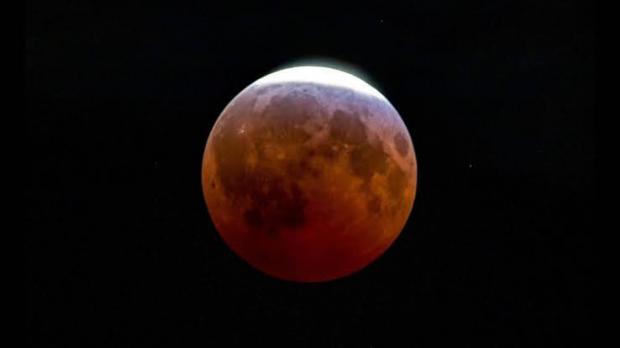
A gorgeous partial lunar eclipse delighted stargazers overnight on Aug. 27-28, as Earth's shadow darkened the full "Sturgeon Moon" in an impressive display of orbital mechanics, and we've got the photos to prove it!
The lunar eclipse occurred as Earth passed between the sun and the moon, granting viewers a spectacular view of our planet's deep umbral shadow as it advanced to cover 96% of the lunar disk, leaving a tiny crescent exposed to direct sunlight.
Photographers were ready and waiting to capture the moon as it turned blood red around the point of maximum eclipse on Aug. 28, as light filtered through Earth's atmosphere via Rayleigh Scattering saturated its shadowed surface. Read on to see our favorite photos of the Aug. 27-28 partial lunar eclipse.
Partial lunar eclipse August 2026: Best photos from around the world
We kick off with a gorgeous photo of the full moon was captured from the Hungarian village of Zsujta by Robert Nemeti just as Earth's shadow took its first "bite" out of the lunar disk, shortly after the partial phase of the eclipse began at 10:33 p.m. EDT on Aug. 27 (0233 GMT on Aug. 28).
Tycho Crater is visible in the lower region of the lunar disk close to the shadow, while bright ejecta rays of reflective material brighten the darker lunar seas, where lava solidified to form basaltic plains billions of years ago.
The eclipsed moon shared the stage with the Parthenon in Athens in this tranquil wide-angle photo from Costas Baltas. Earth's curved silhouette can be seen clearly on the lunar disk, serving as proof of our planet's spherical shape, just as it did for the ancient Greek philosophers who helped pioneer the idea over 2,000 years ago.
Giuseppe Pappa created a stunning composite image of the eclipse depicting Earth's shadow as it rolled across the lunar surface during the partial phase from Pedara, Sicily.
Pappa snapped the images using a Canon 760D with a 300 mm lens to capture the lunar seas standing out on the remaining sunlit portion of the lunar surface.
This atmospheric view of the partially eclipsed moon shining over the Suleymaniye Mosque in Istanbul, Turkiye, was taken by Isa Terli.