










Breaking News
 The Mecca Agreement: A New "Islamic NATO" and What It Means for American Retrenchment
 UPDATE: One Person Dead, Six Injured, Including Three Police Officers in Minneapolis Shooting
 Doug Casey on America's Fading Hegemony and the New World Order
 Are Muslims burning down Japan's sacred shrines and temples?
Top Tech News
 It charges more than it discharges while driving
 Dataminr AI tech to go live on NATO Maven system: CEO
 The Most Dangerous Interview Ever Recorded? PART 2
 2026 cars: George Orwell edition
 Forgotten Amish Survival Bar: 500 Calories, No Fridge, 1930s Recipe
 Your government bought military-grade spyware and it can hear you breathing, watch your camera...
 Here's What to Expect as Air Taxis Actually Begin to Take Off
 'Wood Foam' Startup Uses Logging Waste as Substitute for Plastic, Producing 400 Pounds Daily
 How a Group of Young Men in 1933 Solved a Water Crisis in The Desert -- And Nobody Knows About It
 Tesla's Cybercab Launch Is Next Week. Here's What Tesla Still Needs To Prove



The Mecca Agreement: A New "Islamic NATO" and What It Means for American Retrenchment
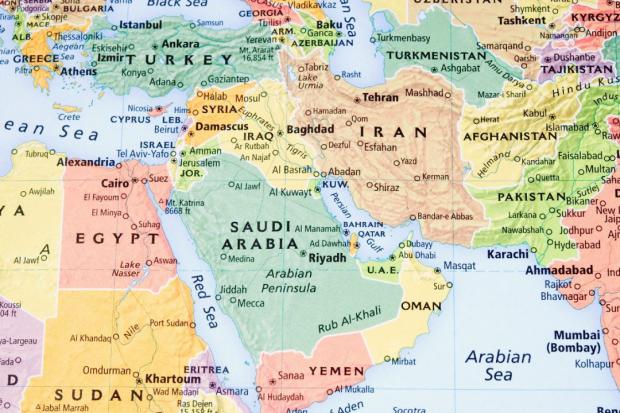
On August 7, in Islam's holiest city, Saudi Crown Prince Mohammed bin Salman, Turkish President Recep Tayyip Erdo?an, and Pakistani Prime Minister Shehbaz Sharif signed the Mecca (or Makkah) Joint Defence Agreement, declaring that an armed attack on any one of the three nations "shall be regarded as an attack against them all" — language deliberately echoing NATO's Article 5. Analysts and outlets quickly nicknamed it the "Islamic NATO," though none of the three governments has officially embraced that label. The pact builds on a bilateral Saudi-Pakistani mutual-defense agreement signed in 2025, with Turkey's addition transforming it into a trilateral security framework.
The combination is formidable on paper: Turkey brings NATO's second-largest standing army and a fast-growing defense-export industry; Saudi Arabia contributes vast financial and energy leverage; and Pakistan supplies a large military and the only nuclear arsenal in the Muslim world. Yet as one legal analysis noted, the signed text sets out no specific military commitments, and neither of the prior bilateral defense arrangements it builds on has ever actually been invoked — grounds for skepticism about how operationally binding the "Article 5" language really is.
Effect of America's Middle East Influence
Geopolitical analyst George Friedman, in a recent interview, offered a striking read on what the pact signals about America's regional posture. In his view, the alliance emerges directly from a deliberate American retrenchment in the Middle East — a strategic choice by Washington to shift burdens onto regional partners rather than continue underwriting their security indefinitely. Friedman argued that the U.S.-Israel relationship, "essential" during the Cold War when it helped block Soviet-aligned Egypt and Syria, has become something closer to what he called an "elective affinity" now that the Cold War rationale no longer applies — meaning Washington may increasingly value ties with Turkey, Saudi Arabia, and Pakistan on their own terms rather than automatically subordinating them to Israel's preferences.