










Breaking News
 The Tesla Cybertruck Finally Gets A Feature That Was Promised Three Years Ago
 New study links prenatal Tylenol exposure to smaller ovaries, uteruses in daughters
 Twenty-five years of "temporary": how 9/11 built a surveillance state Americans never vote
 Dangerous Cosmetics Alert: Why Stearalkonium Chloride and Synthetic Colors Are Chemtrails...
Top Tech News
 Freezable titanium plate keeps your cooler chilled way longer than ice packs
 Review: Affordable thermal device is made for discovering life outdoors
 AI Whistleblower Tells Tucker How AI Could Kill All Humans by 2040
 You Hate Flock? Well There's More...
 Will Spiking Diesel Prices Drive Autonomous Trucking?
 Chinese Concept Video Imagines the Future of Warfare
 OPTIMUS CONFIRMED: 15,000 Bots This Year -- Tesla to $3,000
 What is Going On With Robotaxi and Cybercab? Here Are All the Answers
 Floating data center would provide water and electricity to 32,000 homes
 OpenAI Cuts Off Elon's Cursor, Humanity's First Star Probe, and Trump's Nuclear Mars Shi



The Tesla Cybertruck Finally Gets A Feature That Was Promised Three Years Ago
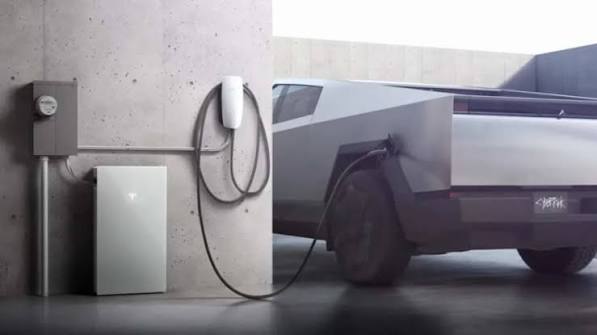
The Tesla Cybertruck can finally power a house during an outage through a Powerwall system, the American company said on one of its official X accounts. The feature, known in the industry as Vehicle-to-Home (V2H), was one of the biggest talking points three years ago, when the first production-ready Cybertrucks reached customers.
Now, the functionality, which enables owners to use the energy stored in the pickup's high-voltage battery to keep the lights on in their house during an outage, is rolling out for homeowners who also have Tesla's home energy storage system. That said, it's not without an asterisk.
Tesla said that the Cybertruck can do V2H only if there's a Powerwall 3 installed at the house. That's the company's latest stationary energy system that can work in conjunction with a solar array to power a home and keep electricity bills low. Tesla's Wall Connector home charger is also required to enable the power export feature.
According to Tesla, adding a Cybertruck to the mix can extend the home backup by over three days, which is equivalent to nine additional Powerwalls. Both the Powerwall 3 and the Cybertruck's power export feature can handle up to 11.5 kilowatts on alternating current (AC), which should be enough for pretty much any scenario.
Tesla calls the new feature Powershare Home Backup, and several owners have reported receiving emails from the company asking them to take a survey before the feature is enabled for their systems.
For now, just the Powerwall 3 is supported, but Tesla said on the official Cybertruck X account that support for the older Powerwall 2 and Powerwall+ energy systems is coming by the end of the year.
"A first of its kind, ambitious feature to seamlessly integrate two different energy sources into one cohesive grid through the same wall connector used for charging," said Wes Morrill, the Cybertruck's lead engineer. Morrill added that the electric pickup has received numerous improvements since the first customer units rolled off the production line.
Back in 2024, Tesla pushed a software update to the Cybertruck that enabled it to keep the lights on in a house through a Powershare Gateway and Universal Wall Connector. The big difference here is that the Powershare Gateway doesn't have its own battery, so it relies on the Cybertruck's pack exclusively to provide energy backup.