










Breaking News
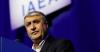 Iran nuclear chief Eslami blocked from IAEA meet after US objects to travel exemption
 The Crippling Effects of Unnecessary War
 Christians for Liberty Conference, Saturday, October 17, 2026, South Lebanon, Ohio
 Roger Waters on 9/11 Lies, Zionism, and AI Music
Top Tech News
 NASA Super Light Solar Sail Project Will Be 12-40 Times Lighter and Faster
 Space Telescope Interferometer to Image Exoplanet Continents
 Twenty-five years of "temporary": how 9/11 built a surveillance state Americans never vote
 I'll Never Buy Another WALMART Battery!
 Shoei GT-Air 3 Smart helmet drops with built-in AR for $1,500
 Freezable titanium plate keeps your cooler chilled way longer than ice packs
 Review: Affordable thermal device is made for discovering life outdoors
 AI Whistleblower Tells Tucker How AI Could Kill All Humans by 2040
 You Hate Flock? Well There's More...
 Will Spiking Diesel Prices Drive Autonomous Trucking?



Iran nuclear chief Eslami blocked from IAEA meet after US objects to travel exemption
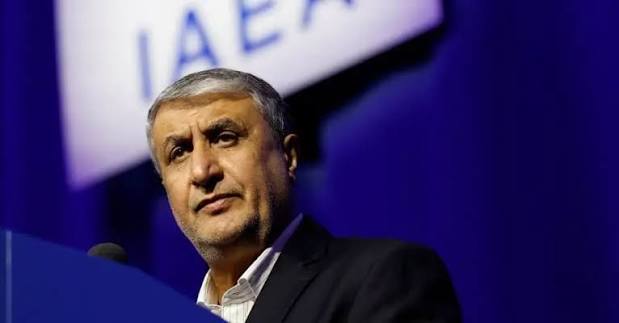
Iran's nuclear chief Mohammad Eslami was blocked from attending the annual conference of the UN's nuclear watchdog in Vienna due to opposition from the US, Iranian state television reported.
"Mohammad Eslami and his delegation took a regular flight to Vienna on Saturday, but were blocked on the way because of obstructions by the United States," the state broadcaster reported, adding that Eslami had returned to Tehran.
Eslami was due to attend the annual general conference of the International Atomic Energy Agency (IAEA), which began in Austria and runs until Friday.
At the opening of the conference, Iran said Austria had revoked Eslami's visa after initially granting him one, accusing the host country of taking a politically motivated decision.
"The cancellation and so-called legal justification advanced for it are a stark indication of a political act and advanced formal politicisation of this organisation," Reuters quoted Iran's ambassador to the IAEA Reza Najafi as telling the conference.
Iranian Foreign Ministry spokesperson Esmaeil Baghaei said the US had pressured Austria into the move. Iran and Russia also said the incident was part of a broader effort to prevent Iranian officials from obtaining visas for international travel.
The US, however, said it had objected to an exemption that would have allowed Eslami to travel despite sanctions reimposed under the so-called "snapback" mechanism at the UN Security Council.
Eslami was among the Iranian officials targeted by sanctions that were lifted under the 2015 nuclear deal between Iran and major powers, including the US. The agreement unravelled after President Donald Trump withdrew Washington from the deal in 2018. Western powers later triggered the "snapback" mechanism to reimpose the sanctions.
Iran and its allies, including Russia, do not recognise the reimposed sanctions. Austria said it had sought an exemption to allow Eslami to attend the IAEA conference.
"Austria, although being only the host state, submitted a request for an exemption to the travel ban to the Security Council sanctions committee, which was rejected," Reuters quoted Ambassador Christian Ebner as saying.
"As a consequence, Austria was obliged to deny one member of the Iranian delegation the entry into its territory," he said.
US Ambassador Preston Wells Griffith III said Washington had objected in New York to granting Eslami an exemption, resulting in the request being rejected.
"The United States objected to the exemption request, which per the rules of the UN sanctions committee resulted in the UN Security Council denying the request," he said.
"His (Eslami's) participation would have only resulted in Iran exploiting IAEA proceedings as a stage for propaganda while sidestepping substantive cooperation, undermining the credibility of the very body charged with verifying its nuclear commitments," he said, referring to the ongoing standoff over inspections.