










Breaking News
 How to Prep in Short-Term Locations
 Revolut Leak Shows the Cost of Constant ID Collection
 15 US Coffee Brands to Avoid -- And 5 That Are Actually Real Coffee
 Why Scammers Stay Silent for 3 Seconds When You Pick Up
Top Tech News
 Quantum computing may soon become part of the microscope itself.
 Volkswagen Just Unveiled The Most Efficient EV Ever Tested
 NASA Super Light Solar Sail Project Will Be 12-40 Times Lighter and Faster
 Space Telescope Interferometer to Image Exoplanet Continents
 Twenty-five years of "temporary": how 9/11 built a surveillance state Americans never vote
 I'll Never Buy Another WALMART Battery!
 Shoei GT-Air 3 Smart helmet drops with built-in AR for $1,500
 AI Whistleblower Tells Tucker How AI Could Kill All Humans by 2040
 You Hate Flock? Well There's More...
 Will Spiking Diesel Prices Drive Autonomous Trucking?



AI Data Center Boom Fueling 'Tidal Wave' of New PFAS Production
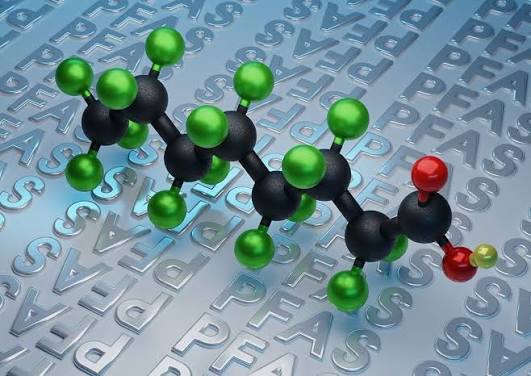
The chemicals are used in cooling systems that keep servers from overheating as demand for artificial intelligence surges. A new report finds that major manufacturers are expanding "forever chemical" production to meet this demand, even as PFAS contamination liabilities mount into the billions.
The "AI revolution" is driving a "tidal wave" of new PFAS production to meet the demands of rapid expansion of artificial intelligence (AI) and the data centers needed to power it, The Guardian reported.
Exploding demand for lithium-ion batteries is also driving up demand for the chemicals, according to a new report by chemical industry watchdog ChemSec.
Per- and polyfluoroalkyl substances (PFAS), also known as "forever chemicals" because they never degrade, have been linked to illnesses including cancer, thyroid disease and inflammatory bowel disease. They've also been linked to developmental issues in children.
In the last two years, new regulations have placed restrictions on some PFAS chemicals in drinking water and food packaging in the U.S. and Europe. And winning lawsuits have compelled some PFAS producers to pay hundreds of millions of dollars to settle health claims against DuPont and other companies.
Yet, ChemSec's survey of the 10 largest PFAS manufacturers found that rather than being deterred by new regulations and the growing body of evidence of PFAS-related health problems, most producers are set to expand production in the coming years.
"PFAS manufacturers all over the world are explicitly framing their investments around 'the AI revolution' and microchip fabrication," ChemSec reported.
PFAS are used at multiple points in the infrastructure underlying AI. They play a key role in semiconductor manufacturing, and they are a major component of cooling systems that remove the enormous amounts of heat generated by data centers.
That demand is fueling new investment in PFAS production even as governments struggle with widespread contamination from decades of previous use, and manufacturers face billions of dollars in liabilities.
ChemSec warns the increased demand driving production expansion signals that "the only effective method to end this toxic pollution crisis is to implement universal bans with strictly time-limited derogations to enable certain sectors to adjust."
Producers ramp up despite health, environmental risks
ChemSec investigated the plans of 10 of the world's leading PFAS producers and found that nearly all of them plan to ramp up production in the U.S., Europe and Asia to meet AI's growing demand.
Computers and servers in data centers get hot. To cool them, sites typically use a compressor with gases that cool air or water — similar to a refrigerator, but on a much larger scale, according to the Sierra Club. Some of those gases contain PFAS.
Alternatively, computers are submerged in a chemical fluid, also containing PFAS, that absorbs the heat. In both cases, chemicals can leach into the earth or the air.