










Breaking News
 Despite German State Stimulus: Machinery Industry Braces For A Catastrophic Year
 'Survival Mode' - Farmers Crushed As Trump's War On Iran Sends Diesel Cost Soaring
 Joby Completes First Autonomous Flight Across US
 Fox News Suspends Its Pool Coverage of Trump, Supports CNN, MS NOW, Politico
Top Tech News
 BEYOND THE MOON: NASA plans a nuclear-powered fleet to push DEEPER into space
 Big Oil Backs Mazama's $135 Million Bet On Superhot Geothermal
 Quantum compass takes flight on Northrop's Lumberjack drone
 Terrifying AI Behavior Even Its Creators Couldn't Explain
 WW3 Near-Miss? AI Hallucinated Nuclear Weapons Components Aboard Chinese Vessel Bound For Iran
 Stripe Is Building the Toll Road for the Machine Economy
 Toyota Dakar hopeful swaps twin-turbo V6 for hydrogen fuel cells
 4-min turbo-inflatable cubic camp castle is now available in the USA
 Researchers Used Claude To Hack OpenAI Employee Accounts
 Chinese Scientists Develop New Oil Refining Method That Cuts Energy Use by 90%



Three Ts will dominate Trump-Xi summit
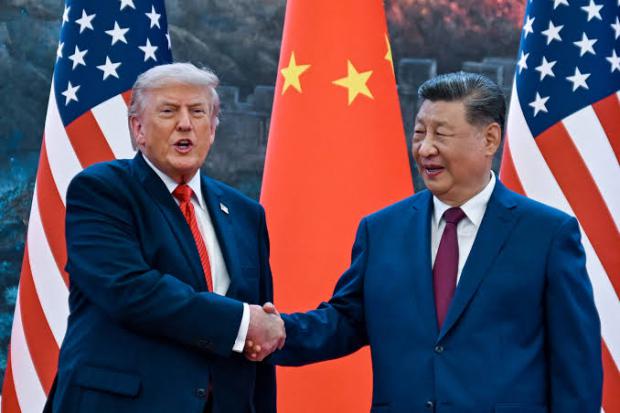
When Presidents Donald Trump and Xi Jinping last sat down in May 2026, talk was centered on three Ts: trade, technology and Taiwan.
The latest summit, due to begin in the United States on Sept. 24, looks set to focus on the same set of issues again. The main difference will be that the technology element has been given added urgency by the sudden and rapid shift in developments in artificial intelligence.
What's less clear is whether the two sides will be able to come to any sort of transformative agreement on that, or any other issue.
Tweaks to trade?
The most urgent issue, but also the simplest to solve, will be on trade.
Nearly a year ago at Busan in South Korea, Trump and Xi hammered out an agreement whereby the US agreed to lift some export controls on high-end technology and to reduce the then three-figure tariffs on Chinese goods. For its part, China agreed not to restrict the flow of critical minerals and rare earths to US users.
That pact is now up for renewal. Both sides are likely to want a continuation of the current arrangement, and while there may be some tweaking on the side, the new deal will probably be similar to the old one.
Each side has proposed in previous meetings that there should be a new instrument, a Board of Trade, that will assess non-sensitive US-China business interests.
However, details about the institution remains vague. Some announcements are likely during the summit, but business leaders will want to know how comprehensive and lasting the arrangements for the board will be.
There is still less information on a proposed Board of Investment, which remains on the drawing board. The Chinese side has proposed bringing major Chinese CEOs to the summit to match the likes of Nvidia's Jensen Huang and Tesla's Elon Musk – both of whom accompanied Trump on the Beijing trip.
But the choice of business leaders is likely to turn on which aspects of trade China thinks are likely to develop most effectively in the short term.
The always thorny issue of Taiwan
Taiwan is a much harder issue to solve, but it's unlikely that much that is discussed on Xi's visit will determine its outcome.