










Breaking News
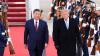 Xi backs AI safety with Trump, draws Taiwan line, urges Iran talks
 The Israeli Lobby Boasts of Its Rule of America
 Dan Priestly and Lars Lead the Tesla Semi Event
 Russia and China have a plan to disable Starlink
Top Tech News
 Tesla Model 3 killer charges from 10 to 97% in just 9 minutes
 World-first unpowered DNA computer sets speed record
 I Power 5 Buildings Off-Grid. Here's How
 The US government is pushing hard to get a working nuclear fission reactor into space by late 2028
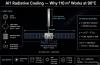 SpaceX Starmind AI in Space Radiator
 China Will Dominate Global Nuclear Energy Through 2035, Analyst Says
 These Absolutely Wild-Looking EVs Are Saudi Arabia's First Homegrown Cars
 BEYOND THE MOON: NASA plans a nuclear-powered fleet to push DEEPER into space
 Big Oil Backs Mazama's $135 Million Bet On Superhot Geothermal
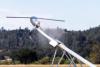 Quantum compass takes flight on Northrop's Lumberjack drone


Covid Was a Praxeological Test. Too Many Libertarians Failed.

Libertarians who have never read Austrian economics accepted the authority of public-health agencies because those agencies employed credentialed experts. They defended corporate mask and vaccine policies as straightforward exercises of private property even when those corporations operated inside a dense web of regulation, government contracting, subsidies, liability rules, and administrative guidance. Some treated skepticism toward the government-directed public-health apparatus as irrational hostility toward science.
The fundamental mistake was not necessarily getting a particular epidemiological question wrong. Libertarianism does not provide a substitute for virology, immunology, or medicine.
The mistake was abandoning the Austrian analysis of human action and institutions precisely when it mattered most.
Praxeology begins with the fact that man acts. Human beings employ scarce means to achieve preferred ends. They respond to incentives, institutional constraints, rewards, penalties, uncertainty, and the distribution of gains and losses. None of this ceases to be true when someone puts on a white coat. A scientist does not stop acting because he becomes a scientist. A bureaucrat does not become an impartial vessel of truth because the letters CDC, NIH, or FDA appear on his paycheck. And an institution does not become a market merely because some organizations carrying out government policy are nominally private. That should have been the Austrian starting point in March 2020.
Praxeology and the Expert Class
There is a caricature according to which distrust of government experts requires believing that expertise itself does not exist. That is nonsense. Praxeology cannot determine the effectiveness of a pharmaceutical compound, calculate an infection-fatality rate, or establish the molecular characteristics of a virus. Those are empirical questions. But Austrian economics tells us something equally important: the institutional environment in which knowledge is produced affects the incentives surrounding its production, interpretation, dissemination, and correction.