










Breaking News
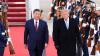 Xi backs AI safety with Trump, draws Taiwan line, urges Iran talks
 The Israeli Lobby Boasts of Its Rule of America
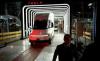 Dan Priestly and Lars Lead the Tesla Semi Event
 Russia and China have a plan to disable Starlink
Top Tech News
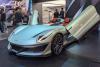 Tesla Model 3 killer charges from 10 to 97% in just 9 minutes
 World-first unpowered DNA computer sets speed record
 I Power 5 Buildings Off-Grid. Here's How
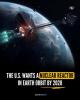 The US government is pushing hard to get a working nuclear fission reactor into space by late 2028
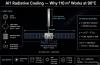 SpaceX Starmind AI in Space Radiator
 China Will Dominate Global Nuclear Energy Through 2035, Analyst Says
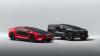 These Absolutely Wild-Looking EVs Are Saudi Arabia's First Homegrown Cars
 BEYOND THE MOON: NASA plans a nuclear-powered fleet to push DEEPER into space
 Big Oil Backs Mazama's $135 Million Bet On Superhot Geothermal
 Quantum compass takes flight on Northrop's Lumberjack drone


Russia and China have a plan to disable Starlink
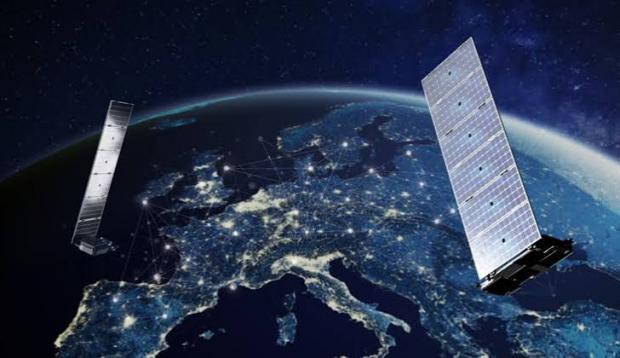
They frame it as a complex of measures rather than a single strike, arguing it is technically feasible. Key points include:
Starlink is a low-Earth-orbit (LEO) constellation of fast-moving satellites, so targeting only those "over Ukraine" is impossible; any serious effort would need to affect the whole system.
Without reliable links to Western planners and analysts, Ukrainian forces would be severely degraded.
Proposed methods:
Cutting terrestrial and undersea communication cables, disrupting data centers, and destroying reconnaissance/command aircraft (regardless of nationality).
Electronic warfare / radio-frequency attack: Expanded use of systems such as Volna Kupol Garant (a trailer-mounted jammer that directs high-frequency signals at passing Starlink satellites to temporarily "deafen" them over ~20 km² areas; unit cost cited around $1.5 million). Mentions of other systems like Tobol, Tirada-2, and the more ambitious Alabuga electromagnetic-weapon concept.
Kinetic anti-satellite weapons: Using systems such as the A-235 Nudol and S-500 Prometheus to shoot down LEO objects (noted as inefficient due to cost-per-satellite).
Debris clouds ("Kessler syndrome"): Releasing hundreds of thousands of metal pellets/balls from orbital platforms to create cascading collisions that damage solar panels and electronics across the constellation.
Non-conventional option: Detonating a nuclear device in space to generate an electromagnetic pulse or artificial radiation belts that fry electronics of hundreds or thousands of LEO satellites. The authors acknowledge this would also destroy Russia's own developing Rassvet constellation (operating at similar altitudes) but still call it "optimal," dismissing legal consequences.
Broader context of Russian (and joint Russia-China) efforts