










Breaking News
 The EU produced 40 million tons of oil in 2005, today it is 15 million tons
 SOMETHING VERY STRANGE IS HAPPENING IN THE STOCK MARKET
 Private Equity Is Buying Life Insurers, and the Public Bears the Heightened Risk
 Five fund bosses jailed in Turkey, accused of stock manipulation and fraud
Top Tech News
 Tesla Model 3 killer charges from 10 to 97% in just 9 minutes
 World-first unpowered DNA computer sets speed record
 I Power 5 Buildings Off-Grid. Here's How
 The US government is pushing hard to get a working nuclear fission reactor into space by late 2028
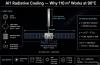 SpaceX Starmind AI in Space Radiator
 China Will Dominate Global Nuclear Energy Through 2035, Analyst Says
 These Absolutely Wild-Looking EVs Are Saudi Arabia's First Homegrown Cars
 BEYOND THE MOON: NASA plans a nuclear-powered fleet to push DEEPER into space
 Big Oil Backs Mazama's $135 Million Bet On Superhot Geothermal
 Quantum compass takes flight on Northrop's Lumberjack drone


Private Equity Is Buying Life Insurers, and the Public Bears the Heightened Risk

In new research, Pranjal Drall and Andrew Granato argue that the move of private equity firms into life insurance has increased the probability that insurers will go insolvent. If they do, under an obscure system of insurance guaranty funds, the losses will spread out beyond the insolvent insurer's creditors to other insurers and, ultimately, taxpayers.
Life insurance has long been considered one of the least exciting parts of finance. Policyholders, wanting to provide for their families in the event of tragedy, buy long-lasting policies that pay out money to their beneficiaries if they die early. Life insurers sell large quantities of policies, thereby pooling risk and spreading out potential financial losses. The insurers then invest the proceeds in safe, high-quality corporate bonds. The insurers earn a small spread and the beneficiaries can be confident that their life insurer will be solvent if and when it comes time to pay the bill.
As with many industries, the rise of private equity (PE) has fundamentally reworked this staid business model of life insurance. In about fifteen years, PE has grown from controlling no life insurers to controlling about 15% of the sector. In most industries, PE invests in private companies to boost profitability before selling or merging them with another company. In contrast, PE firms take control of insurers to combine the money from selling insurance policies with alternative private-credit lending, in part to finance their traditional buyout funds.