










Breaking News
 Covert Pentagon Propagandists Are Tracking Anti-War Americans, Skirting The Law
 'We Hacked the FBI:' Hackers Say They Have Data on All FBI Employees
 Why Your Magnesium Isn't Working (3 Nighttime Mistakes)
 Your Robotic Vacuum Is Watching You -- Could It Someday Testify Against You in Court?
Top Tech News
 Tesla Model 3 killer charges from 10 to 97% in just 9 minutes
 World-first unpowered DNA computer sets speed record
 I Power 5 Buildings Off-Grid. Here's How
 The US government is pushing hard to get a working nuclear fission reactor into space by late 2028
 SpaceX Starmind AI in Space Radiator
 China Will Dominate Global Nuclear Energy Through 2035, Analyst Says
 These Absolutely Wild-Looking EVs Are Saudi Arabia's First Homegrown Cars
 BEYOND THE MOON: NASA plans a nuclear-powered fleet to push DEEPER into space
 Big Oil Backs Mazama's $135 Million Bet On Superhot Geothermal
 Quantum compass takes flight on Northrop's Lumberjack drone


The Era of More Junk in Orbit (Thanks, Elon)
SpaceX is scheduled as soon as Monday to launch its huge reusable rocket into orbit for the first time on its maiden commercial mission to deploy the company's new V3 satellites. Although SpaceX won't attempt to recapture either the booster or the second-stage spacecraft, the company has already demonstrated it can catch the booster, and it made a controlled landing of Starship in the Indian Ocean, paving the way for routine capture of both stages for reuse, which is the key to lower costs and more frequent launches.
The industry already got a taste of lower launch costs with SpaceX's partially reusable Falcon 9 rocket, whose booster is retrievable. Worldwide orbital launches tripled to 329 last year from 102 in 2019. Falcon 9 accounted for half of those 2025 launches and carried more than 80% of payloads by tonnage. Starship is designed with a payload capacity of 100 metric tons, more than five times Falcon 9's capacity to low Earth orbit.
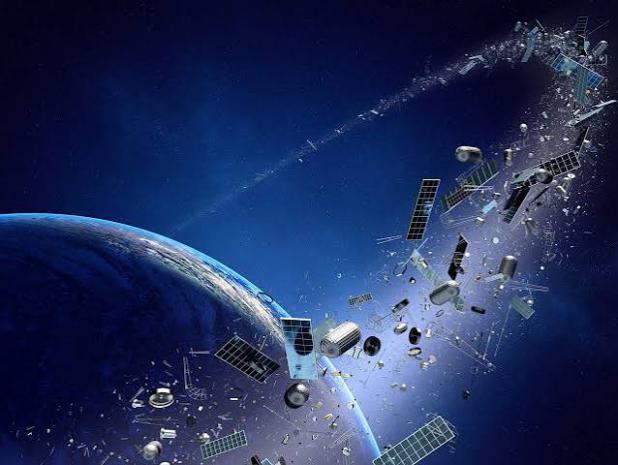
The downside to this new era in space exploration is that humans are likely to leave much more debris floating around in orbit. It will take a concerted effort by nations and companies — from prevention to new technologies — to avoid turning space into a gigantic junkyard that puts satellites and other spacecraft at risk.
Europe and the US have taken the lead on best practices to avoid space junk, but there are no mandates nor penalties. And a worldwide effort is unlikely to coalesce. The US and Russia are responsible for the most debris in space because they've been launching the longest, but China is catching up quickly with its aggressive space program. And the US added new tension this month when it confirmed that it has weapons in space after warning that China and Russia are developing their own, an effort that may accelerate with the US' push to create a Golden Dome defense system. A shooting war in space could cripple satellite communication on Earth and spread even more debris.
Regardless of weaponization, space is only going to get more crowded, especially in low Earth orbit, where countries and companies want to emulate SpaceX's massive constellation of about 10,000 active satellites.
Even though most companies have adopted best practices to avoid leaving space debris in orbit, accidents are inevitable. For orbits that are 500 kilometers (310 miles) above Earth and lower — where SpaceX deploys almost all its satellites — the drag from the atmosphere pulls down objects in a relatively short time, and they burn up before reaching the ground. At higher altitudes with less drag, objects can stay in orbit for years and even decades.
Unfortunately, thousands of old satellites and rocket boosters are already still floating around space, and many of these were abandoned before the best practices of burning off remaining fuel and disconnecting batteries. Old fuel tanks and batteries degrade over the years and can explode spontaneously, sending debris in all directions — some of which gets caught in orbit and can linger for decades.