










Breaking News
 Covert Pentagon Propagandists Are Tracking Anti-War Americans, Skirting The Law
 'We Hacked the FBI:' Hackers Say They Have Data on All FBI Employees
 Why Your Magnesium Isn't Working (3 Nighttime Mistakes)
 Your Robotic Vacuum Is Watching You -- Could It Someday Testify Against You in Court?
Top Tech News
 Tesla Model 3 killer charges from 10 to 97% in just 9 minutes
 World-first unpowered DNA computer sets speed record
 I Power 5 Buildings Off-Grid. Here's How
 The US government is pushing hard to get a working nuclear fission reactor into space by late 2028
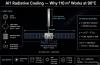 SpaceX Starmind AI in Space Radiator
 China Will Dominate Global Nuclear Energy Through 2035, Analyst Says
 These Absolutely Wild-Looking EVs Are Saudi Arabia's First Homegrown Cars
 BEYOND THE MOON: NASA plans a nuclear-powered fleet to push DEEPER into space
 Big Oil Backs Mazama's $135 Million Bet On Superhot Geothermal
 Quantum compass takes flight on Northrop's Lumberjack drone


Your Robotic Vacuum Is Watching You -- Could It Someday Testify Against You in Court?
But the laws governing how that evidence can be used remain a patchwork. Consumers would have a better idea of their exposure if manufacturers disclosed at the point of sale what a device records, where the data goes and how long it persists.
A husband in Taiwan suspected his wife of having an affair. In September 2023, he found a used toothbrush at their holiday home, and garage video showed an unfamiliar man driving his wife there. Three months later, he opened their robot vacuum's app to speak with her and saw an intimate encounter through its live camera.
He recorded the feed and used it to win about $16,000 from his wife and her lover for infringing on his marital rights. Then the Taoyuan District Court sentenced him to five months in jail and fined him roughly $4,700 for recording private activity without consent.
Both rulings are defensible. Together, they expose a troubling gap: Devices in homes now generate evidence continuously and often invisibly, while the governing law remains a patchwork. As faculty members in a school of interdisciplinary forensics, we see such cases where forensic practice meets law that has not kept pace.
The house that watches
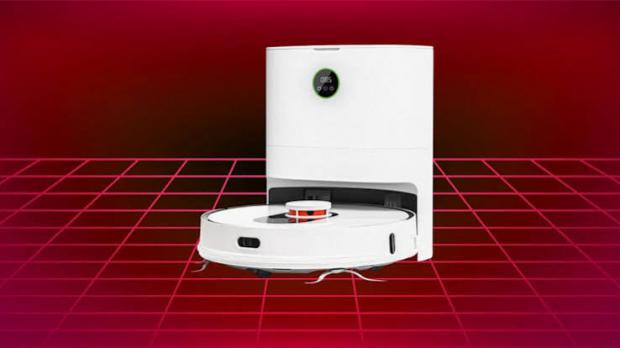
A modern robot vacuum is a mobile sensor platform. Some models combine cameras, microphones, laser navigation and remote video access, while app-connected models create detailed floor maps and cleaning histories. Their data may also reach manufacturers' servers.
In 2022, MIT Technology Review revealed images from development versions of iRobot's Roomba J7, including a woman on a toilet. Test-household images had gone to a data-labeling contractor, where workers posted them in private social media groups.
No hacking was required; the leak arose from the ordinary pipeline used to train object-recognition software.
Digital witnesses are already testifying
Courts have confronted household data for years. Arkansas prosecutors charged James Bates with murder after a friend died in his hot tub, then sought recordings from his Amazon Echo and cited smart-meter data suggesting overnight water use.
Amazon resisted until Bates consented. However, prosecutors could not eliminate other reasonable explanations, and they eventually dropped the charge.
In Connecticut, Richard Dabate claimed that an intruder murdered his wife, Connie. Her Fitbit data contradicted his timeline and helped establish when she stopped moving. A jury convicted him, and in 2025, the Connecticut Supreme Court upheld the conviction and found the Fitbit evidence scientifically reliable.
In Ohio, Ross Compton's pacemaker data was used to challenge his account of a house fire, raising a novel Fourth Amendment question: How much privacy protection should apply to intimate medical data generated by an implanted device?