










Breaking News
 Iran warns US of 'greater damage' as Trump rejects Hormuz reopening plan
 SOMETHING IS HAPPENING IN CALIFORNIA | DON'T MISS IT!
 They're Gonna Steal Your Savings to Force Digital Currency
 Julian Assange Is Back -- Here's What That Means
Top Tech News
 Tesla Model 3 killer charges from 10 to 97% in just 9 minutes
 World-first unpowered DNA computer sets speed record
 I Power 5 Buildings Off-Grid. Here's How
 The US government is pushing hard to get a working nuclear fission reactor into space by late 2028
 SpaceX Starmind AI in Space Radiator
 China Will Dominate Global Nuclear Energy Through 2035, Analyst Says
 These Absolutely Wild-Looking EVs Are Saudi Arabia's First Homegrown Cars
 BEYOND THE MOON: NASA plans a nuclear-powered fleet to push DEEPER into space
 Big Oil Backs Mazama's $135 Million Bet On Superhot Geothermal
 Quantum compass takes flight on Northrop's Lumberjack drone


Iran warns US of 'greater damage' as Trump rejects Hormuz reopening plan
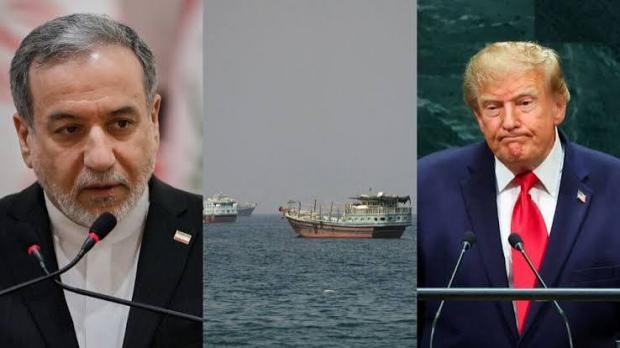
Iran's armed forces are prepared to confront any renewed US attack, Iranian state media quoted army spokesperson Mohammad Akraminia as saying on Sunday, after US President Donald Trump rejected Tehran's proposal to reopen the Strait of Hormuz and end the fighting.
Akraminia said Iran's military was fully prepared for a confrontation and warned that Washington would face greater damage if it launched another attack against Iran.
Iranian Army Commander-in-Chief Amir Hatami separately described the war as being at a "critical and decisive" stage. He said Tehran would not accept a situation in which Iran was prevented from trading while foreign powers continued to use strategic waterways in the region.
"If Iran cannot trade, if Iran cannot live, no one will be able to trade or live," Hatami said, adding that Tehran would not allow its adversaries to use the Strait of Hormuz, which he described as a matter of Iran's "dignity and honour", while depriving the Iranian people of access to it.
Iranian Foreign Minister Abbas Araghchi said Tehran's proposal called for an end to hostilities across the Middle East, including in Lebanon, along with the implementation of conditions contained in a ceasefire understanding that collapsed months ago.
The earlier agreement included provisions for the release of frozen Iranian assets, the lifting of sanctions on Iranian oil and an end to the US naval blockade.
"Our conditions are clear, and any move toward reopening the Strait of Hormuz is contingent upon these conditions being fulfilled. We will not back down from them," Araghchi said on Sunday, according to Iranian state broadcaster IRIB.
'Tool for pressure'
Washington and Tehran had signed a memorandum of understanding in June aimed at ending the war, reopening the Strait of Hormuz and beginning negotiations over Iran's nuclear programme. The understanding later collapsed amid renewed fighting and tensions over shipping through the waterway.
Iran requires vessels to obtain authorisation before passing through the strait, citing security and sovereignty concerns. Ships that fail to comply have been targeted, while the United States has periodically carried out strikes on Iranian coastal areas in response.
At the United Nations, Saudi Foreign Minister Faisal bin Farhan criticised what he described as the international community's failure to ensure the Strait of Hormuz and Bab al-Mandab remain open.