










Breaking News
 At least seven dead and dozens injured after explosion at Canadian military base...
 BYD's flagship e-SUV packs insane 9-minute flash charging
 The Narrative On Trial | Full Oral Plea | English Language Version
 Honda is working on in-road wireless magnetic EV charging system
Top Tech News
 I Built a Website to Expose Solar and Battery Scams
 Whistleblower Issues Dire Warning: Rogue AI, Hacking Nuclear Programs...
 Multi-material insulation delivers up to 10,000 x the stiffness
 Anduril's plan to save US sub edge from China's undersea surge
 Researchers Develop AI 'Mind-Reading' Tool That Reconstructs What Your Eyes See
 Video: Dexterous robot hand learns the delicate art of silk embroidery
 The computer that can read your mind:
 Seven apps. One craft
 SHOCK CASE REPORT: Advanced Alzheimer's Patient Regains Speech, Memory, Mobility...
 Most artificial limbs rely on silicone or plastic to mimic human hands.



The Strange Case Of NAC: The Supplement The FDA Says Isn't One
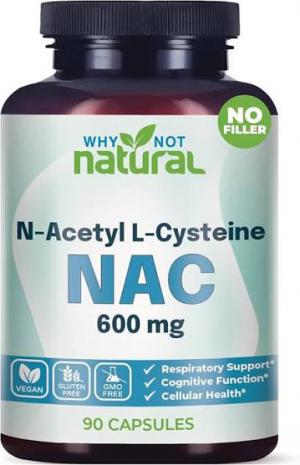
People take it for liver support after a long night, for their lungs and, lately, as a longevity staple. One brand among dozens, NOW, said in 2021 that it alone had sold "millions, perhaps billions" of NAC pills with no adverse event reports. NAC is also the latest supplement to land under the Eye of Sauron, otherwise known as the FDA.
The FDA's weapon is a clause in federal law: an ingredient approved as a drug, or authorized for serious study as one, before it was sold as a supplement can't be a supplement. The FDA has used the clause against red yeast rice, whose active compound is the same molecule as Merck's cholesterol drug lovastatin; against a form of vitamin B6 in 2009; against CBD after the seizure drug Epidiolex was approved; and against NMN in 2022, a ban it reversed in September 2025 after an industry lawsuit.
NAC's case is simpler on paper. It was approved as a drug in 1963, before it was sold as a supplement, the FDA says. What the agency has done with that fact since is anything but simple.
The latest turn: the FDA's own regulatory calendar set July 2026 as the target for a proposed rule on whether NAC can be sold as a supplement. July came and went with nothing published. When the White House released its 2026 regulatory agenda on July 30, the proposal was still listed with a July 2026 target, a date that had already passed.
The law firm Covington says the rule appears to cover NAC. If so, it would be the rulemaking the FDA said in 2022 it was "considering." Until it arrives, NAC sits where it has since 2020: officially not a supplement, sold as one because the FDA has chosen not to enforce.
It started with hangover pills. In July 2020, the FDA sent a warning letter to a company selling them, and buried in it was a new argument about NAC. According to the FDA, NAC "was approved as a new drug" on September 14, 1963, which meant products containing it were "excluded from the dietary supplement definition."
Attack On NAC!
Due to the looming threat of enforcement, in May 2021 Amazon said it was "removing the products in question from our store." The Council for Responsible Nutrition, a supplement trade group, petitioned the FDA in June 2021. The Natural Products Association followed in August, and in December it sued, calling the move "a regulatory sneak attack by the FDA."
In March 2022, the FDA denied the petitions' core request and repeated that "NAC is excluded from the definition of a dietary supplement." Then it blinked. Final guidance that August said the agency would "exercise enforcement discretion" for certain NAC products, since "our initial review has not revealed safety concerns," and that it was "considering initiating rulemaking." NAC was back on Amazon by late August, and the NPA dropped its suit that November.