










Breaking News
 Robert Scott Bell Interview: The MAHA Substack Firestorm, a Failing Western Medicine...
 Worse Than 2008. Worse Than COVID. And They Call It a Boom.
 We Should Celebrate When Entrepreneurs like Musk, Jobs and Bezos Succeed
 Elon Musk: What Comes Next for Humanity
Top Tech News
 Anduril's plan to save US sub edge from China's undersea surge
 Researchers Develop AI 'Mind-Reading' Tool That Reconstructs What Your Eyes See
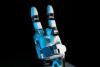 Video: Dexterous robot hand learns the delicate art of silk embroidery
 The computer that can read your mind:
 Seven apps. One craft
 SHOCK CASE REPORT: Advanced Alzheimer's Patient Regains Speech, Memory, Mobility...
 Most artificial limbs rely on silicone or plastic to mimic human hands.
 Flying cell tower beams phone signal to Japan from 10 miles up
 Chinese Commercial Reactor Achieves Nuclear Fusion with Clean Hydrogen-Boron Fuel
 Palmer Luckey: Autonomous Weapons Are Ancient and Why Anduril Won't Build Humanoids | EP #295



Video: Dexterous robot hand learns the delicate art of silk embroidery
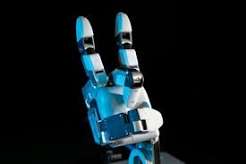
The synthetic hand has learned to split silk strands, thread a needle, stretch fabric across a frame, and stitch, following a craft with more than 2,500 years of history.
A key step in Suzhou embroidery is dividing a main silk thread into its individual strands (16, according to the video below). To manage it, one finger teases the strands apart while the others hold the tension. The fingertips then have to stay in contact and let the thread rotate as it's gently twisted. Threading and stitching add demands on positioning, force, and coordination.
Agilink hasn't said exactly which model appears in the video, but it looks identical to the OmniHand 3 Ultra-M. That version is roughly the size of a human hand and weighs 630 g (1.4 lb). It uses a direct-drive design, meaning no tendons or intermediate transmissions sit between motor and joint. It can hold 3 kg (6.6 lb) stably, lift up to 8 kg (17.6 lb), open and close in about 0.3 seconds, and repeat positions to within about 0.2 mm (0.008 in).
The robohand's touch relies on vision-based sensors in each fingertip, which watch the contact surface for tiny changes, a bit like a camera peering at the inside of a soft pad. According to the company, the fingertips measure force in three dimensions and detect deformations of 0.08 mm (0.003 in). That helps the hand tell a slipping object from one it's merely brushing. The palm adds a 300-point contact sensor.
The embroidery stunt points at a real bottleneck for humanoid robots. Without fine control of force, a machine can see and move but can't act without breaking something or hurting someone. Developing mechanized hands capable of such dexterity could be a key driver in the adoption of humanoids in domestic settings, though likely won't be needed for most factory jobs.
Progress in this space is rapid. LinkerBot's Linker Hand L30 Pro, for instance, mimics human anatomy with five tendon-driven fingers, as ours do. It aims for speed and repeatability, meaning the same motion done consistently, in tasks such as driving screws or picking up thin sheets. But copying human anatomy makes the hands heavier, and LinkerBot concedes that fingertip force is modest.
That said, LinkerBot hands mounted to humanoid robots from a company called Humanoid genuinely impressed us during a recent visit to InnoEx in Hong Kong, where they tickled the ivories and bashed out some beats in a four-piece robo-band.