






Breaking News
 2026-10-15 -- Ernest Hancock and Dr Phranq Tamburri (Trump Report) MP3&4
 Semafor: I Cost the GOP a Senate Seat. Now I'm Doing It to 8 More.
 Episode 498: VACCINE INJURY VINDICATION, CLIMATE SKEPTICS GAIN GROUND...
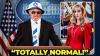 "The President is Busy Dismantling the Deep State!" – Press Secretary
Top Tech News
 I Built a Website to Expose Solar and Battery Scams
 Whistleblower Issues Dire Warning: Rogue AI, Hacking Nuclear Programs...
 Multi-material insulation delivers up to 10,000 x the stiffness
 Anduril's plan to save US sub edge from China's undersea surge
 Researchers Develop AI 'Mind-Reading' Tool That Reconstructs What Your Eyes See
 Video: Dexterous robot hand learns the delicate art of silk embroidery
 The computer that can read your mind:
 Seven apps. One craft
 SHOCK CASE REPORT: Advanced Alzheimer's Patient Regains Speech, Memory, Mobility...
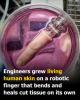 Most artificial limbs rely on silicone or plastic to mimic human hands.


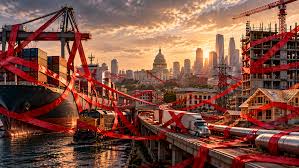
America Got Rich on Competition, Then Legislated It Away
Hardly anyone had even seen an airplane. A coast-to-coast round trip cost about $260, half the price of a new car, so passengers were mostly very wealthy.
The airlines were small, and during the Depression they were losing money. Congress was afraid they would undercut each other into bankruptcy, and the country would lose an industry it needed for its mail and its defense.
So lawmakers created the agency that became the Civil Aeronautics Board. For the next forty years, the Board set the airfare on every interstate route in America. They even decided which airlines were allowed to fly those routes.
The idea was well intended; they viewed airlines as an element of national security that needed protection.
But whatever good intentions the Board started with, by the 1970s it was just a soulless bureaucracy that stifled competition and said "no" to everything new.
An airline that wanted to CUT its prices needed the Board's permission. So did anyone who wanted to start a new major airline.
Between 1950 and 1974, 79 new airlines applied to the Board. Zero were approved.
The consequences were obvious; remember, the Board only regulated interstate routes, so the public could see the difference.
For example, in 1965, a California airline called PSA flew Los Angeles to San Francisco for $11.43. Because the route was within the state, it was unregulated.
Meanwhile, the cheapest ticket from Boston to Washington— about the same distance, but across state lines and hence regulated by the Board— was $24.65.
In other words, federal regulation more than doubled the fare.
By the late 1970s Americans were hurting. The Arab oil embargo of 1973 had nearly quadrupled the price of oil, which stayed high. It was the decade of stagflation: prices had nearly doubled in ten years, inflation was running near 9% by the fall of 1978.
President Jimmy Carter was looking for anything he could do to bring prices down.
He understood that more competition means lower prices. "Of all our weapons against inflation," he told the country in a televised speech on October 24, 1978, "competition is the most powerful."
That same day he signed a law phasing the Board out, and by 1985 it no longer existed.
Sure enough, within six years the average airfare had fallen, even though inflation was still raging elsewhere in the economy.
And this was Jimmy Carter… hardly a free market champion.