










Breaking News
 Iran's mountain shelters offer Taiwan a China survival playbook
 Exposing the True Evils of the Uniparty: Soros Money, Surveillance, and the Rise of a Third Party
 18,000+ Kids Injected With Vaccines While Unconscious At Colorado Hospital
 58% Of Americans Get Their News From Four Left-Leaning Aggregators; Study Finds
Top Tech News
 Modular phone promises total privacy at the flick of a switch
 Genetically Engineered War Dogs for 134 Pound Cyborg Dire Wolves Now – Later 600 Pound Wolves
 They're Quietly REPLACING Our Food With THIS… And Nobody Is Talking About It!
 Chicago Opens First "Teacher-Free" AI School as Global Push Accelerates
 Solar Panels Are Doing Something Nobody Expected
 DeLorean climbs skyward to race electric flying cars
 Atari's 800XL returns with a keyboard, cartridges and BASIC
 Bioinspired robot airdrops into remote waters via morphing wing-sail
 Anduril interceptor adapts to emerging threats via swappable stages
 I Built a Website to Expose Solar and Battery Scams



Iran's mountain shelters offer Taiwan a China survival playbook
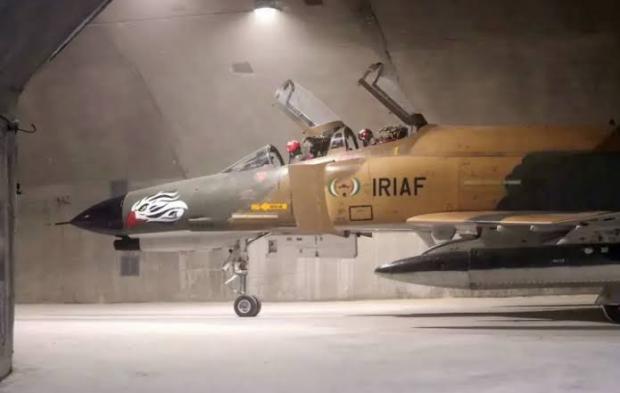
Iran's rapid post-strike recovery of its Eagle 44 airbase proves that hardened mountain shelters remain a decisive shield against precision firepower, transforming how inferior air forces survive and deter superior adversaries.
This month, The War Zone (TWZ) reported that Iran is actively repairing and expanding its subterranean Eagle 44 airbase in Hormozgan province, despite having absorbed at least three rounds of joint US and Israeli airstrikes this year, according to Planet Labs satellite imagery.
The mountain-carved complex — built roughly 160 kilometers northwest of the Strait of Hormuz to shield fighter jets, drones and missiles — was targeted in March and July under the US-led Operation Epic Fury to sever its underground hangars from the 4.35-kilometer runway.
However, late-September imagery shows Iran bulldozing strike debris, clearing runway obstructions, finishing paving on a primary western taxiway segment, and beginning subgrade preparation on an adjacent section to establish a redundant access link.
While three support buildings remain heavily damaged and deep portal conditions remain obscured, the rapid reconstruction shows Iran prioritizing critical subterranean infrastructure by deploying engineering units to restore sortie capabilities amid an ongoing naval blockade.
This resilience directly contradicts assessments from the US Department of Defense (DoD) and the Trump administration asserting Iran's air force and missile infrastructure have been functionally eliminated.
Iran's wartime preservation of combat aviation through hardened subterranean facilities demonstrates how inferior air forces can absorb pre-emptive strikes and conduct asymmetric counter-offensives—offering a viable strategic blueprint for a survival doctrine against superior airpower.
Dylan Malyasov mentions in an April 2026 Defense Blog article that Iran's fortress doctrine of sheltering combat aircraft inside hardened subterranean facilities—such as the Eagle 44 complex—validated its strategic value by preserving an estimated two-thirds of the country's operational air fleet under heavy US and Israeli airstrikes.
For context, Harrison Kass writes in a March 2026 article for The National Interest that before Operation Epic Fury, Iran had 250 to 300 combat aircraft, including about 135 fighters, but only a fraction of them may have been airworthy at any given time.