










Breaking News
 More Americans Are Falling For Romance Scams. Here's How They Entice You...
 These Solar Panels Are HUGE
 Jeffrey Sachs on Netanyahu's Struggle to Keep Control of the World's Most Bloodthirsty Ethno
 We Compare 5 Investments Over 5 years, Plus a Winning Strategy Going Forward.
Top Tech News
 Ancient Builders Moved Stones We Still Struggle to Explain
 Startup Unveils "Big Iron" Rocket Whose Upper Stage Is An Orbital Data Center
 The NYPD's New Cell Tracker Is Built For Mobility
 Electronic skin instantly displays touch as light
 $10k EV hatch packs in 5-minute flash charging
 Apex Recordhunter electric drone sets unofficial speed record
 Space-age manna: USAF & SpaceX drop survival kit from orbit
 World's first nuclear fusion power plant coming to WA | FOX 13 Seattle
 Advanced Small Modular Reactors (SMRs)
 A U.S. energy startup has demonstrated a new type of nuclear reactor that uses existing nuclear...



Blessing Or Curse: Pax Silica In The Philippines
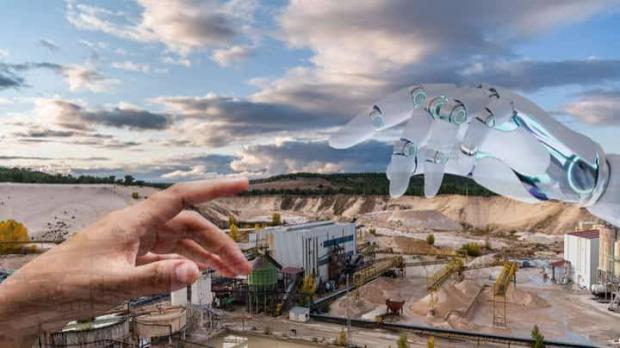
While supporters view the project as an economic catalyst, its critics argue that the massive initiative poses a threat to national interest and local communities.
Ambitious endeavor The United States came up with the idea of Pax Silica in Dec. 2025 to counter China's dominance in technology manufacturing. It aims to secure supply chains for artificial intelligence, semiconductors, and critical minerals.
China is said to be controlling about 90% of rare earth refining that allows for the manufacture of advanced chips. But in 2025, the country implemented rare earth controls in response to US tariffs.
The proposed Pax Silica hub in the Philippines, envisioned as the Luzon Economic Corridor, covers a total area of 1,620 hectares (approximately 4,000 acres) in New Clark City in Capas, Tarlac, a former US military base.
Original members of the Pax Silica alliance include the United States, Japan, South Korea, Singapore, the United Kingdom, Israel, the United Arab Emirates, and Australia. Now it has over 30 member states. The Philippines joined the initiative in April.
Trade Undersecretary Ceferino Rodolfo said the Philippine government will be signing a framework deal with a US government agency for Pax Silica bound by Philippine laws.
Bases Conversion and Development Authority (BCDA) President and CEO Joshua Bingcang earlier said that the three-phase project is expected to start in 2028.
Good deal? President Ferdinand Marcos Jr. gave his full support to Pax Silica, describing it in his fifth State of the Nation Address as a center in the global AI and technology value chain. "It will bring quality jobs to our people, accelerate our industrial competitiveness, and revitalize our economy." According to Bingcang, Pax Silica can pull in investments of up to $30 billion to $70 billion and could generate over 130,000 jobs for Filipino engineers, researchers, computer science graduates, and other highly skilled professionals.
Other government agencies that expressed support for the initiative are the Office of the President, Department of Trade and Industry, BCDA, and the National Water Resources Board.
Political analyst Dennis Coronacion said the Pax Silica project would definitely be identified as one of Marcos' most ambitious projects even if its operations begin past his term.
Cost But critics warned that the massive technological infrastructure would demand a costly toll.
AI data centers and semiconductor facilities require massive daily cooling volumes estimated at 65 million to 90 million liters of water per day, raising questions as to whether the area can sustain the project without affecting existing supplies.