










Breaking News
 TEXAS SHATTERS MIDTERM EARLY VOTING RECORD
 Must-Watch Emergency Saturday Broadcast: Tune In Now & Learn What Is Really Behind The Global...
 The Next Metals Boom Belongs to Physical Owners
 And The Winner For Poorest Big City In America Is...
Top Tech News
 Microreactor Gets DOE Approval for Full Power Testing, Previously Contracts with Army...
 Ford Fathom: Everything We Know About The Sub-$30,000 Affordable EV Truck
 Love it or loathe it, AI is birthing a golden age of science
 SpaceX has no competition -- Saurav Shroff, Starpath
 Living computers forge a 'hive mind' and work together to outsmart AI
 The Faraday duffle bag: A digital lifeline in a surveillance-saturated world
 Delivery Robots Accused Of Scanning Customers' Faces, Sharing Biometric Data
 Brace Yourselves: Serious Trouble Brewing In The Data Center Industry
 FDA-Approval for Drill-Free Cavity Care May Be Imminent After Great Phase 3 Treatment Trial
 California Startup Says It Has Injected AI-Designed Virus Into Humans For First Time



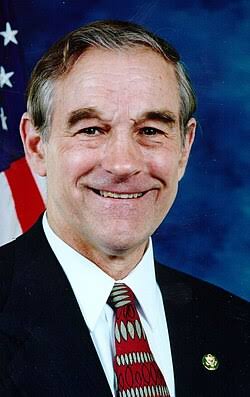
Ron Paul's 2001 Alternative: What Could Have Been
Part of this is because many hold to an unrealistic and idealized "War on Terror" - which was just and, despite mistakes, imperfectly accomplished most or all its stated objectives - instead of the historical War on Terror. Even recognizing significant missteps and disasters of the War on Terror, many defenders would have us believe that - as bad as it was - there was no viable alternative.
(Let us also note that Obama, Trump, Biden, and Trump again all enjoyed electoral success while campaigning, to varying degrees, against the War on Terror, its consequences, or America's prolonged foreign interventions - even as their subsequent policies often contradicted their campaign rhetoric. Yet, despite repeated promises to learn the lessons of these wars, interventionist policies persisted, while some political leaders and commentators even sought to rehabilitate the War on Terror's reputation or even recast renewed military intervention as entirely consistent with the promises on which they had campaigned.)
All that reviewed, what many do not know or remember was that, 25 years ago - in the fall and winter 2001 - Ron Paul proposed an alternative response to 9/11 that deserves serious recognition.
While a staunch non-interventionist in foreign policy, Ron Paul did not suggest that the United States do nothing in response to 9/11. Even as Paul recognized the relevant foreign policy and geopolitical history that contributed to the attacks, he proposed a targeted response against those responsible rather than an expansive, indefinite, global War on Terror. Specifically, Paul introduced legislation authorizing Congress to exercise its little-known power under Article I, Section 8, Clause 11 of the Constitution to "grant Letters of Marque and Reprisal." This would have authorized the president to commission appropriate parties to capture Osama bin Laden, members of al Qaeda, and others responsible for the September 11 attacks, as well as seize their property.
Paul's proposal also authorized the president to use a portion of the $40 billion already appropriated by Congress in response to the attacks to establish a bounty for bin Laden's capture. By placing the issuance of letters of marque and reprisal under presidential authority, the legislation sought to coordinate these efforts with the administration's broader pursuit of the perpetrators.
Rather than pursuing an open-ended military campaign against terrorism around the world - a campaign that would eventually involve destabilizing governments and countries that had nothing to do with 9/11, and even supporting armed groups with ties to al Qaeda - Paul's approach emphasized identifying and apprehending those directly responsible for 9/11 while avoiding the widespread destruction, civilian casualties, and additional hostility that a broader war in the Middle East risked producing.