










Breaking News
 TEXAS SHATTERS MIDTERM EARLY VOTING RECORD
 Must-Watch Emergency Saturday Broadcast: Tune In Now & Learn What Is Really Behind The Global...
 The Next Metals Boom Belongs to Physical Owners
 And The Winner For Poorest Big City In America Is...
Top Tech News
 Microreactor Gets DOE Approval for Full Power Testing, Previously Contracts with Army...
 Ford Fathom: Everything We Know About The Sub-$30,000 Affordable EV Truck
 Love it or loathe it, AI is birthing a golden age of science
 SpaceX has no competition -- Saurav Shroff, Starpath
 Living computers forge a 'hive mind' and work together to outsmart AI
 The Faraday duffle bag: A digital lifeline in a surveillance-saturated world
 Delivery Robots Accused Of Scanning Customers' Faces, Sharing Biometric Data
 Brace Yourselves: Serious Trouble Brewing In The Data Center Industry
 FDA-Approval for Drill-Free Cavity Care May Be Imminent After Great Phase 3 Treatment Trial
 California Startup Says It Has Injected AI-Designed Virus Into Humans For First Time



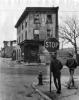
And The Winner For Poorest Big City In America Is...
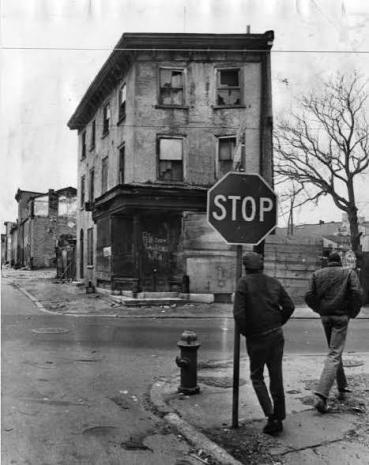
A whopping 20.4% of Philadelphia residents lived below the poverty line in 2025, according to newly released U.S. Census Bureau data, marking the city's first increase in poverty since 2011.
The figures, first reported by The Philadelphia Inquirer, put Philadelphia ahead of Houston and New York City, which both recorded poverty rates of 17.7%.
The reversal comes after Philadelphia briefly surrendered its unwanted title to Houston in 2024, when its poverty rate dropped to 19.7%, its lowest level since at least 1979.
The latest figures also revealed that Philadelphia's median household income stood at just $67,400 in 2025. A family of four earning approximately $32,750 annually was considered to be living in poverty, according to federal guidelines.
In a statement to the Inquirer, Philadelphia Mayor Cherelle Parker (D) conceded that city's poverty rate unacceptable.
"A rate of 20.4 percent is too high and unacceptable to me as mayor," the mayor said, pointing to the rising cost of everyday necessities as a major burden on struggling families.
"Affordability is a very real issue, and basic staples like food, fuel and clothing cost too much for too many Philadelphians," she added.
Philadelphia's poverty rate peaked at 28.4% in 2011 before gradually declining over the following decade.
Philadelphia's poverty figures come as city officials push a risky new housing scheme that bears troubling echoes of the 2008 financial crisis.
As we reported earlier Friday, Philadelphia plans to roll out a taxpayer-subsidized mortgage program allowing first-time homebuyers to put down as little as 3% and avoid private mortgage insurance, with public funds covering part of the interest costs.
The program, dubbed One Philly Mortgage, is part of Parker's H.O.M.E. housing initiative, which earmarks $25 million for low-interest mortgages and down-payment assistance.
However, questions remain about who will shoulder the financial risks.
Private mortgage insurance typically costs between $30 and $70 per month for every $100,000 borrowed, according to Freddie Mac. Homeowners could end up paying nearly $3,000 a year on a $350,000 mortgage.
The insurance protects lenders if borrowers with little equity default on their loans. Under Philadelphia's program, buyers would not be required to pay it, although publicly available city materials do not specify who would assume that risk instead.