










Breaking News
 Ukrainian Intelligence Just Tried Its Own Version Of The Israeli Pager Attack
 Futures Mixed As America Votes, Apple Slides And Oil Rebounds After "Defensive" US Strike
 Second Wave Of Cyberattacks Paralyze Supermarket Fridges Across EU, Weeks After Gov'ts Urged...
 Alarming Abuse Identified In Secret Ukraine Azov Battalion Detainment & Forced Conscript...
Top Tech News
 PRP vs Exosomes vs Stem Cells: Which Fits Your Condition?
 SHOCKING: The Secret (Frantzve) Family Business
 Microreactor Gets DOE Approval for Full Power Testing, Previously Contracts with Army...
 Ford Fathom: Everything We Know About The Sub-$30,000 Affordable EV Truck
 Love it or loathe it, AI is birthing a golden age of science
 SpaceX has no competition -- Saurav Shroff, Starpath
 Living computers forge a 'hive mind' and work together to outsmart AI
 The Faraday duffle bag: A digital lifeline in a surveillance-saturated world
 Delivery Robots Accused Of Scanning Customers' Faces, Sharing Biometric Data
 FDA-Approval for Drill-Free Cavity Care May Be Imminent After Great Phase 3 Treatment Trial



Mania and Depression. Peaks and Valleys.
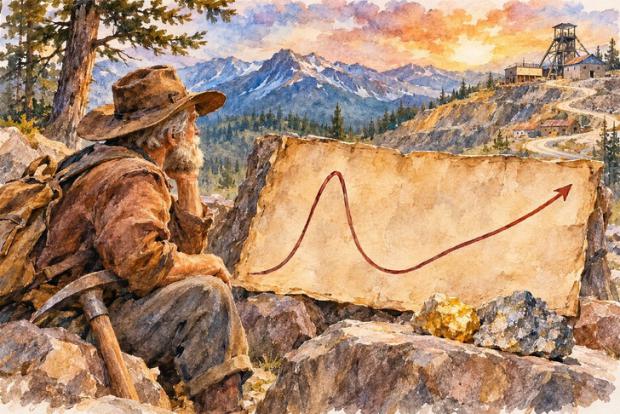
Junior miners start with a claim, a geologist, hope, some spare change, and then a press release. A speculator's job is to provide the spare change to the companies with good prospects, and at the right time.
What is the right time for us?
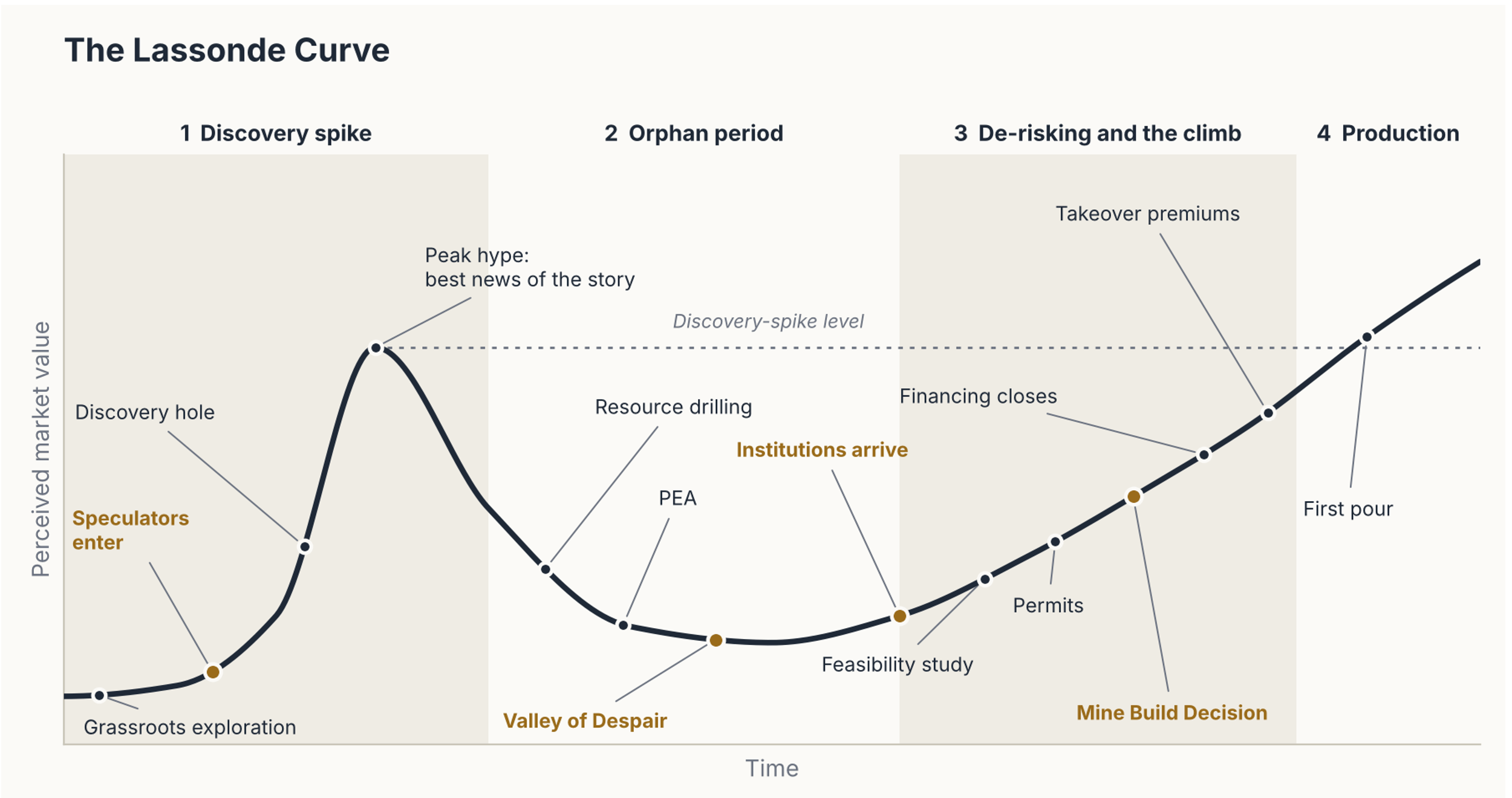
Pierre Lassonde co-founded Franco-Nevada and later served as president of Newmont Mining. During decades of financing and owning mining companies, he'd noticed that junior miners' perceived market values follow a repeatable arc. That arc is now called the Lassonde Curve.
Learn the curve and you will know when to be excited and when to be bored.
The Lassonde Curve applies most directly to junior miners that have one primary target. Here's an idealized version of it, with approximate locations of the various standard milestones.
Stage One: The Discovery Spike
A company raises a little money, picks some pretty rocks from the ground (grab samples) and maybe drills a couple of holes. A few ridiculously high grab sample assay results, or a high-grade intercept on a drill core, provide the meat for a press release, and the stock doubles.
At this point the company owns an interesting piece of land. It does not own a mine. Nobody knows how big the deposit is, whether the metal can be recovered at a profit, or whether a government will grant a permit. Speculators arrive first, retail traders follow, and the price rises on hope.
Here's the key: the peak often comes on the best news the company will release for years. Buyers at the top are paying as if the mine already exists. Pure hope. But there is no mine and won't be for a long time. After discovery, the average mine takes about 15 to 18 years before it produces. If it ever produces. Most discoveries never become producing mines.