










Breaking News
 Ukrainian Intelligence Just Tried Its Own Version Of The Israeli Pager Attack
 Futures Mixed As America Votes, Apple Slides And Oil Rebounds After "Defensive" US Strike
 Second Wave Of Cyberattacks Paralyze Supermarket Fridges Across EU, Weeks After Gov'ts Urged...
 Alarming Abuse Identified In Secret Ukraine Azov Battalion Detainment & Forced Conscript...
Top Tech News
 PRP vs Exosomes vs Stem Cells: Which Fits Your Condition?
 SHOCKING: The Secret (Frantzve) Family Business
 Microreactor Gets DOE Approval for Full Power Testing, Previously Contracts with Army...
 Ford Fathom: Everything We Know About The Sub-$30,000 Affordable EV Truck
 Love it or loathe it, AI is birthing a golden age of science
 SpaceX has no competition -- Saurav Shroff, Starpath
 Living computers forge a 'hive mind' and work together to outsmart AI
 The Faraday duffle bag: A digital lifeline in a surveillance-saturated world
 Delivery Robots Accused Of Scanning Customers' Faces, Sharing Biometric Data
 FDA-Approval for Drill-Free Cavity Care May Be Imminent After Great Phase 3 Treatment Trial



The Crisis In Poland
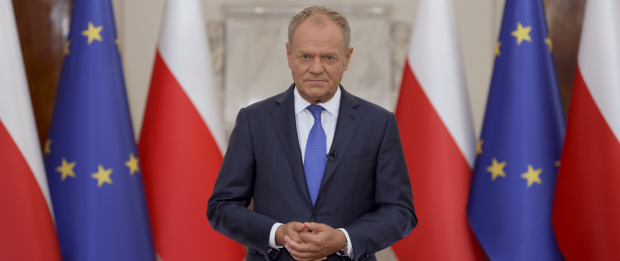
1) The first thing to say about Poland is that the current crisis is unlikely to turn violent, certainly not in a sustained way. There will be a lot of yelling and name-calling and a lot of references to obscure old feuds and scandals, but Poland is not Ukraine or even France, and will muddle through as usual with some kind of woolly compromise to see us through the next few years.
General Jaruzelski, the last major leader under Communism, used to be the neighbour who shared the boundary fence at the bottom of my garden. He oversaw martial law and a secret service which was pretty vicious – but looking back with the perspective of history, the remarkable thing is not how much, but how little, violent repression was used against Solidarno?? in 1980 to 1983. Some 120 people were killed and thousands imprisoned, but for a revolution that triggered world-shaking political change that is remarkably restrained.
Then with Wa??sa in power as President, Jaruzelski used to go about Warsaw quite openly, and I would say "Dzie? Dobry Panie Generale" to him in the mornings as he walked past my gate. Violence is not natural in Polish politics.
2) The second thing to understand is that Polish politics is split between the right and the nationalist right. The left is now almost insignificant – the mildly social-democratic Nowa Lewica is a small junior partner in Tusk's governing coalition and polls about 8%. That is pretty well the only "left". Elements of the governing Civic Coalition – such as Foreign Minister Radek Sikorski, are very right by British standards. Sikorski was in the Bullingdon Club with Osborne and Johnson and is a bit to the right of either on social or economic policy.
The opposition nationalist right are socially conservative and religious: abortion remains the touchstone defining issue, which directly relates to the current dispute about the Constitutional Tribunal. There is no significant economic division between the right and nationalist right, with the latter perhaps slightly more socially minded in matters like welfare spending.
It is a great mistake to try to shoehorn the divisions into a classic economic policy-related party alignment of left and right, or even into the liberal vs populist model. Poland is sui generis, a thing unto itself.