










Breaking News
 Interview 2044 – Sunday(?) Update Covers The Flop of COP
 Chinese university bought Nvidia H200 chips despite US blacklist
 Implant Zaps Excess Sugar Directly From Blood
 FRANCE CLAIMS IRAN ATTACKED THEM | Are you ready?
Top Tech News
 Dead Simple Apocalypse Power: Build It in an Hour
 Gritt and MasTec partner to bring physical AI to solar construction sites
 Baby it's cold INSIDE! Scientists create the coldest temperature ever recorded in the lab...
 I am IN LOVE with AIRCRETE! Off-Grid, Earth-Covered Dome
 Musk's Starlink Is Building An Orbital Bypass As Undersea Cable Sabotage Threats Mount
 A robot just built a structure in space for the first time
 The Greatest Theft in Human History
 3D-Printed Tungsten Survives 74 Fusion Plasma Discharges, Advancing the Engineering...
 Dude turns a $23 used smartphone into the 4G brain of an RC aircraft.
 China's World-Beating Supercar Just Hit 312 MPH



Implant Zaps Excess Sugar Directly From Blood
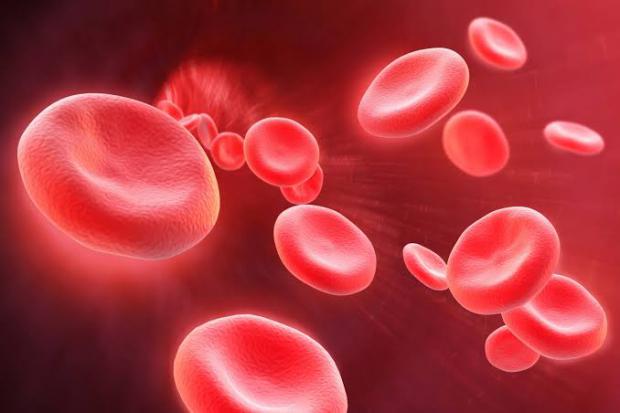
For all the technological advances in diabetes care, the basic approach to treatment remains much the same: Use drugs (such as GLP-1 therapies) or hormones (such as insulin) to change how the body handles sugar. But what if, instead of altering the body's metabolism, doctors could remove excess sugar directly?
That's the idea behind a wirelessly powered implant that harnesses electricity to drive a chemical reaction that converts glucose into a more easily excreted by-product, which the kidneys can flush out in urine. The implant is built around gold flakes dotted with platinum particles—the electrodes that drive the reaction—and packed into a porous graphite matrix.
It's "a paradigm shift in the biomedical use of electrocatalysis—from sensing glucose to actively regulating it," says Salvatore Pullano, an electronics engineer at the Magna Græcia University of Catanzaro in Italy who was not involved in the study.
The technology builds on a growing class of diabetes devices known as closed-loop systems or bionic pancreases. These typically pair a continuous glucose monitor (CGM) with an insulin pump and software that adjusts insulin delivery in response to changing blood sugar levels, helping people stay within a healthy range with less manual intervention.
Such systems are now an established option for managing type 1 diabetes, the form of the disease that often strikes in childhood, when the immune system mistakenly attacks the pancreas's insulin-producing cells. Closed-loop systems are sometimes used by people with insulin-requiring type 2 diabetes (T2D) as well.
The new technology, termed ECHO (electrocatalytic closed-loop health optimization) and described last month in Science, takes the same feedback-control principle but, instead of adjusting the supply of insulin, aims to eliminate excess glucose itself—an approach geared toward T2D, in which the body often still produces insulin but becomes resistant to its effects.
In mouse models of obesity-linked T2D, the device, when paired with a CGM, switched itself on whenever sugar levels crossed an upper threshold, holding the animals in the normal range for days at a time without a single dose of medication. If the system can be scaled to human blood volumes and proven safe long term, it could offer an alternative to the injections and pills that dominate care today.
"It's very creative and clever," says Omid Veiseh, a bioengineer at Rice University who was not involved in the research. Plenty of practical obstacles stand between a mouse experiment and a device that works in people. "But it's a stepping-stone," he says, "and I think there are definitely opportunities for more engineering to create an actual product."
How ECHO clears glucose
Developed by bioengineer Martin Fussenegger and his colleagues at the Swiss Federal Institute of Technology in Zurich, the implant is housed in a 3D-printed box, roughly the size of a small USB thumb drive, placed under the skin. That box is then wrapped in a cellulose bag and a plant-based coating for biocompatibility.
Inside the enclosure sits a scrap of graphite felt studded with platinum-coated gold nanoclusters, which serves as the glucose-clearing electrode, and a circuit board that draws its power from an external radio-frequency transmitter.