










Breaking News
 one sweet kiss, and the funniest surprise! This golden lady moment is pure happiness!
 Trump, Xi and Putin hold rare 3-way talks on nuclear risks but emerge with no major breakthroughs
 The Society That Government Did Not Create
 US Air Force to turn Cold War B-1B bombers into a hypersonic missile carrier with Boeing
Top Tech News
 Extraterrestrial habitats may rise via Legos of laser-fused moon dust
 Battery-only 19-seater puts China in the electric airliner race
 Dream Chaser space plane gets landing approval for debut mission in 2027
 SpaceX Just Caught Starship on Its FIRST Attempt!
 Solid-State Cells Can Make The U.S. Competitive In Batteries Again: CEO
 Jetson ONE personal eVTOL pod is about to go full sky patrol
 America's INSANE BREAKTHROUGH Could Replace Septic Tanks Forever
 Amazing DIY Building Material for Home & Yard - Inexpensive and Easy!
 Researchers have discovered a massive deposit of hidden water...
 Amazon's Ring Unveils Flying Drone And Robot To Patrol Homes And Businesses



US Air Force to turn Cold War B-1B bombers into a hypersonic missile carrier with Boeing
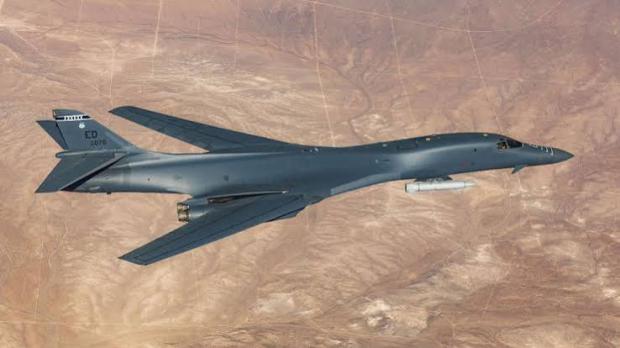
Boeing's Load Adaptable Modular (LAM) external weapons pylon for the U.S. Air Force's B-1B Lancer strategic bomber has cleared its critical design review, marking a key engineering milestone that moves the system from blueprint to hardware manufacturing and flight testing.
The upgrade is designed to restore the heavy bomber's external carriage capability, allowing it to haul oversized hypersonic missiles and significantly expand its conventional munitions load.
While the B-1B already carries the largest internal payload of any bomber in the U.S. Air Force inventory, up to 75,000 pounds (34,019 kilograms) distributed across three internal weapons bays, those enclosed bays restrict the length and diameter of next-generation standoff weapons.
By mounting new pylons beneath the fuselage, the Air Force aims to unlock extra carrying capacity without redesigning the bomber's airframe.
Repurposing dormant Cold War hardpoints
In a Boeing announcement on November 17, 2026, following the completion of the May 2026 preliminary design review, the critical design review confirmed that the LAM pylon's engineering architecture is complete and established a formal product baseline with the Air Force's B-1 program office. "We are starting a new chapter in this journey," said Lynsay Brannock, Boeing's B-1 program manager. "This is the moment when we shift from designing the solution to preparing to produce and test it."
Rather than cutting into the bomber's structure to install new mounting points, Boeing's Oklahoma City engineering team, led by engineer Tristin Lam, after whom the pylon is named, designed the hardware to bolt onto six existing external hardpoints beneath the fuselage.
Those attachment points were originally engineered during the Cold War to carry nuclear Air-Launched Cruise Missiles before being deactivated to comply with strategic arms-control treaties. By reactivating all six stations with modular pylons, the B-1B gains flexible external carriage tailored to different mission profiles.
Boeing estimates the upgrade could effectively double the bomber's total payload capacity, while earlier Air Force demonstrations at Edwards Air Force Base have tested the pylon concept with both conventional precision bombs and oversized hypersonic weapon shapes.