










Breaking News
 The 3-Day Plan to Break Iran - And Why It Leads to Forever War
 EXCLUSIVE: Big Tech Is Directing A False Flag Cyberattack Designed By Bill Gates...
 Stocks Plunge as AI Selloff Pushes S&P 500 and Dow Into Correction
 Macaulay Culkin, 46, will return to Home Alone franchise as Kevin McCallister in long-awaited sequel
Top Tech News
 Dubai Just Finished the World's First Permanent Air Taxi Route: Airport to the Marina in Under 1
 Doroni Aerospace Raises More than $60m for H1?X Development
 After 13 Years Battling Cancer, a 61-Year-Old Brazilian Man Achieved Complete Remission...
 Extraterrestrial habitats may rise via Legos of laser-fused moon dust
 Battery-only 19-seater puts China in the electric airliner race
 Dream Chaser space plane gets landing approval for debut mission in 2027
 SpaceX Just Caught Starship on Its FIRST Attempt!
 Solid-State Cells Can Make The U.S. Competitive In Batteries Again: CEO
 Jetson ONE personal eVTOL pod is about to go full sky patrol
 America's INSANE BREAKTHROUGH Could Replace Septic Tanks Forever



The 3-Day Plan to Break Iran - And Why It Leads to Forever War
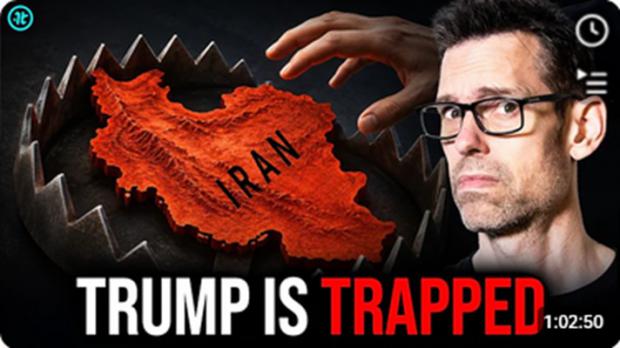
Hey everybody, Tom Bilyeu here. On today's episode of Impact Theory, we're taking on a topic that's got the whole world holding its breath: the escalating crisis between the United States and Iran. As tensions ratchet up, we're asking the tough questions—how did we get stuck in this "escalation trap," and what does it mean for America's global leverage, our economy, and our very sense of security?
The conversation focused on why the traditional idea of "strategy" might be failing policymakers, using powerful analogies—like chess versus roulette—to show how doubling down in conflict can spiral out of control. We'll break down the risks of tactical "wins" that create even bigger crises, the real leverage Iran holds with control of the Strait of Hormuz, and the mounting pressure on President Trump as political support erodes and legacy hangs in the balance.
A key theme that emerged is what happens when military might runs into decentralized opposition, and why high-stakes gambles—like the proposed 3-day bombing campaign—could drag America into a "forever war" with devastating global consequences. We'll explore the dangers of inspired attacks, cyberwarfare, and how the psychology of leadership and legacy can drive decisions right up to the brink.