










Breaking News
City by City Being Eaten Alive by Third World Immigration in America
 "Doomsday": U.S. Military Planning To Survive 90 Days Without Power Grid
 Former DOGE Staffers Hacked Into Anthropic's Internal Systems In 12 Hours...
 MASSIVE CRASH at the opening in Brazil
Top Tech News
 Modular phone promises total privacy at the flick of a switch
 Genetically Engineered War Dogs for 134 Pound Cyborg Dire Wolves Now – Later 600 Pound Wolves
 They're Quietly REPLACING Our Food With THIS… And Nobody Is Talking About It!
 Chicago Opens First "Teacher-Free" AI School as Global Push Accelerates
 Solar Panels Are Doing Something Nobody Expected
 DeLorean climbs skyward to race electric flying cars
 Atari's 800XL returns with a keyboard, cartridges and BASIC
 Bioinspired robot airdrops into remote waters via morphing wing-sail
 Anduril interceptor adapts to emerging threats via swappable stages
 I Built a Website to Expose Solar and Battery Scams


Sodium-ion battery breakthrough: CATL's latest innovation allows for 300 mile EVs
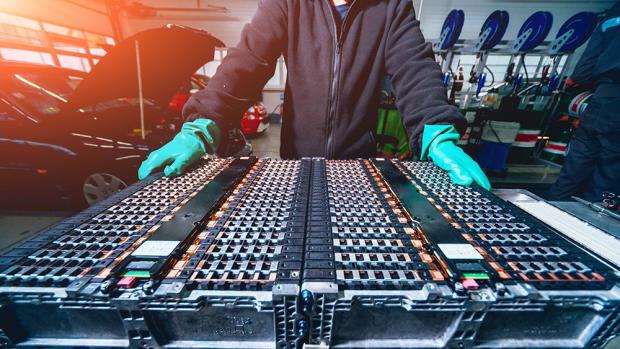
Early sodium-ion prototypes didn't always perform up to par; however, this narrative is now rapidly changing. CATL, the world's largest battery manufacturer, has unveiled its next-generation sodium-ion battery, dubbed Naxtra, which boasts a pure electric range exceeding 500 kilometers (310 miles). Its energy density of 175 Wh/kg is now nipping at the heels of commercial lithium iron phosphate (LFP) batteries, closing the gap that once seemed unbridgeable. But the true superpower of sodium-ion technology may lie in its resilience. The chemistry is remarkably resistant to the ravages of cold, a notorious enemy of lithium-ion performance. Where a lithium battery in a freezing climate can see its charging speed slow to a crawl and its available power plummet, the Naxtra battery retains 90 percent of its usable power even at a brutal -40 C and can achieve an 80 percent charge in just 15 minutes at room temperature.
This toughness translates into an almost unimaginable longevity. CATL projects a lifespan of 10,000 charging and discharging cycles for its Naxtra battery, which translates into a theoretical road life of 3.6 million miles. This endurance makes the technology particularly compelling for two major applications: grid energy storage and entry-level electric vehicles. For grid storage, where the daily charge-discharge cycle is the norm, a battery that can last for decades without significant degradation is a game-changer for the economics of renewable energy. The long-term value begins to eclipse the one-time purchase price. The history of battery development has often been a frantic race to pack more energy into a smaller space, but sodium-ion technology reminds us that for many of our future energy needs, the race will be won by the sturdiest, not just the strongest.
A chemistry of abundance and calm
The allure of sodium begins with its sheer ubiquity. Lithium is a geographically concentrated resource, sometimes unflatteringly called 'white gold." Its extraction fuels water-intensive mining and geopolitical friction. Sodium, by contrast, is the sixth most abundant element on Earth, harvested from seawater and salt deposits. This fundamental difference in availability is not just an economic equation; it is a philosophical shift away from a resource scarcity model. The production process for sodium-ion cells sidesteps the need for cobalt and copper, further distancing the technology from the polluting and often controversial mining practices that have stained the reputation of the clean energy movement. For nations and companies seeking energy independence, sodium offers a path untethered from unstable lithium markets.