










Breaking News
 Inside Job? Congressman Thomas Massie Exposes the Truth about the Jan 6 Pipe Bombs
 The Diesel Heater They DON'T Want You to See -- Real 20kW Output!
 DOJ Backs Warrantless Invasion Of Gun Owners' Homes
 In pardon of narco trafficker, Trump destroys his own case for war
Top Tech News
 Latest Comet 3I Atlas Anomolies Like the Impossible 600,000 Mile Long Sunward Tail
 Tesla Just Opened Its Biggest Supercharger Station Ever--And It's Powered By Solar And Batteries
 Your body already knows how to regrow limbs. We just haven't figured out how to turn it on yet.
 We've wiretapped the gut-brain hotline to decode signals driving disease
 3D-printable concrete alternative hardens in three days, not four weeks
 Could satellite-beaming planes and airships make SpaceX's Starlink obsolete?
 First totally synthetic human brain model has been realized
 Mach-23 potato gun to shoot satellites into space
 Blue Origin Will Increase New Glenn Thrust 15-25% and Make Rocket Bigger
 Pennsylvania Bill – 'Jetsons Act' – Aims To Green-Light Flying Cars



DOJ Backs Warrantless Invasion Of Gun Owners' Homes
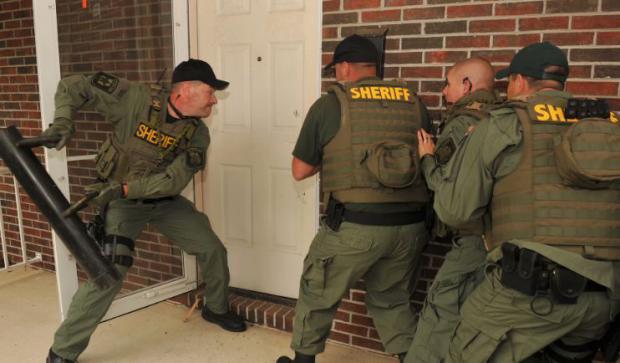
The most recent incident comes from the corrupt-Bondi led Justice Department in a Montana case.
ZeroHedge has the story.
After Montana police illegally invaded a man's home during a welfare check, the Supreme Court is set to hear a case which may ultimately unravel the protections of the 4th amendment.
Aidan Johnston, Director of Federal Affairs for Gun Owners of America,
The Department of Justice under Attorney General Pam Bondi is advancing an argument that threatens to hollow out the Fourth Amendment's core protection: that Americans may be secure in their homes against warrantless searches.
The lawsuit is Case v. Montana. After a difficult breakup, William Trevor Case was at home alone when police arrived for a so-called "welfare check." They spent nearly an hour outside his house. Officers walked around the property, shined flashlights through windows, and even discussed calling his relatives or reaching him directly. They never did. Instead, they retrieved rifles and a ballistic shield, broke down his door without a warrant, and shot him.
Case survived, but his rights did not.
The Montana Supreme Court upheld the police's warrantless entry. Apparently, the government's "reasonable suspicion" that Treavor Case might need "help" was sufficient to justify an armed warrantless intrusion into his home. That standard is alarmingly low. The Fourth Amendment requires probable cause and judicial approval before government agents may enter a home. It does not permit entry based on a hunch.
And it was not as if obtaining a warrant would have been difficult. A recent Harvard Law Review study found that 93 percent of warrants are approved on first submission, often in less than three minutes. With modern technology, police can draft and submit warrant requests directly from their phones. The officers in Montana had nearly an hour to seek judicial approval. They chose not to.
The U.S. Supreme Court addressed a similar issue in Caniglia v. Strom in 2021. In that case, officers entered a man's home without a warrant after a domestic dispute, claiming they were acting as "community caretakers." The Court unanimously rejected that argument. Justice Clarence Thomas wrote that the Fourth Amendment's protections do not vanish just because police say they are trying to help. The Court allowed for true emergencies—cases of imminent harm or death—but drew a clear line against open-ended "caretaking" exceptions.