










Breaking News
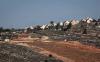 Israel Expands Territory With 19 New Settlements In West Bank
 Netherlands court orders Bill Gates and Albert Bourla to stand trial over Covid death and injury...
 Watch: Trump Announces New 'Golden Fleet' of Battleships
 You're Not Allowed to Notice This. Highlights
Top Tech News
 Perfect Aircrete, Kitchen Ingredients.
 Futuristic pixel-raising display lets you feel what's onscreen
 Cutting-Edge Facility Generates Pure Water and Hydrogen Fuel from Seawater for Mere Pennies
 This tiny dev board is packed with features for ambitious makers
 Scientists Discover Gel to Regrow Tooth Enamel
 Vitamin C and Dandelion Root Killing Cancer Cells -- as Former CDC Director Calls for COVID-19...
 Galactic Brain: US firm plans space-based data centers, power grid to challenge China
 A microbial cleanup for glyphosate just earned a patent. Here's why that matters
 Japan Breaks Internet Speed Record with 5 Million Times Faster Data Transfer
 Advanced Propulsion Resources Part 1 of 2


Imagine All the People: Food, Freedom and What It Means To Be Human
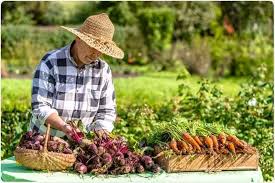
But he did not foresee a world where the only thing left to colonise would be our own humanity.
Today, the 'dream' has become a civilisation crisis, a cage of standardisation, designed to strip us of our culture and our biological autonomy (the corporate and geopolitical forces behind this are set out in Corporate Power, Imperial Capitalism and the Struggle for Food Sovereignty).
Most critiques of the global agrifood system, even those that describe themselves as radical, remain confined within the system's own language.
They argue over efficiency versus sustainability and yields versus biodiversity. These debates often assume that the underlying framework of industrial development is given and that the task is to optimise outcomes within it.
But what if you refuse this paradigm? What if you expose what is usually kept beyond the bounds of policy debate? What if you argue that the crisis of food and agriculture is not primarily technical, environmental or economic but strikes at the heart of what it means to be human? And what if we ask: what kind of humans are prevailing societal structures producing?
Food systems are not neutral mechanisms for delivering calories. Industrial, corporate-controlled food systems cultivate compliant consumers trained to accept abundance and convenience without knowledge or responsibility.
They produce farmers locked into cycles of debt, dependency and technological obedience, compelled to follow protocols designed elsewhere and measured by metrics they did not choose.
Even resistance is repackaged as ethical consumption, some barcode-scanning app that tells you how 'healthy' a product is or niche markets that leave the underlying logic intact.
Modern agrifood systems exemplify a world governed by Max Weber's notion of instrumental reason. Decisions appear inevitable, justified by science, markets or returns on investment logic. This 'iron cage' is internalised and normalised and results in the type of food we eat daily.