










Breaking News
City by City Being Eaten Alive by Third World Immigration in America
 "Doomsday": U.S. Military Planning To Survive 90 Days Without Power Grid
 Former DOGE Staffers Hacked Into Anthropic's Internal Systems In 12 Hours...
 MASSIVE CRASH at the opening in Brazil
Top Tech News
 Modular phone promises total privacy at the flick of a switch
 Genetically Engineered War Dogs for 134 Pound Cyborg Dire Wolves Now – Later 600 Pound Wolves
 They're Quietly REPLACING Our Food With THIS… And Nobody Is Talking About It!
 Chicago Opens First "Teacher-Free" AI School as Global Push Accelerates
 Solar Panels Are Doing Something Nobody Expected
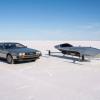 DeLorean climbs skyward to race electric flying cars
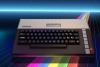 Atari's 800XL returns with a keyboard, cartridges and BASIC
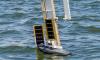 Bioinspired robot airdrops into remote waters via morphing wing-sail
 Anduril interceptor adapts to emerging threats via swappable stages
 I Built a Website to Expose Solar and Battery Scams


Advanced Propulsion Resources Part 1 of 2
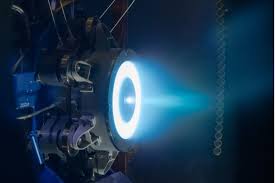
For those interested in learning about Advanced Propulsion methods related to spaceflight or wish to delve into Breakthrough Propulsion Physics or wish to become a Propulsion Physicist, here's a list of books, papers and other resources that the author of this article has found well worth reading or watching with some suggestions. This author has categorized the resources in various topics that are of particular interest to his areas of interest and research. This area of Applied and Theoretical Physics is a vast topic covering multiple disciplines intertwined with Materials Science and Engineering. There are literally hundreds of potential propulsion system configurations conceived depending on mission type within the solar system and beyond. The author of this article has only listed publications he has read and recommends so. It is by no means a complete list. Any suggested additions the reader can recommend, feel free to drop the author a line.
One will need a good grasp of Physics and Mathematics (differential and integral calculus as a minimum) to understand the various physical principles involved. It is strongly recommended doing a degree in Physics at a local university or if that's not an option, there are plenty of resources online to get one started. OpenStax (Rice University) is an excellent peer reviewed resource with free online textbooks covering Physics, Astronomy and Mathematics. For another good free Physics textbook, read Motion Mountain which uses a different approach to teaching Physics with less emphasis on the maths and more on the understanding of the physical concepts.
A well rounded Propulsion Physicist should read from a variety of sources and keep up with the latest developments because in this field new insights and developments come up often. The author recommends joining LinkedIn, there are a lot of highly skilled and very smart people on this platform who post relevant updates or articles which can be very informative (and some not so informative or wrong), so cross check their claims, facts, sources, figures and assess accordingly. There are free repositories that one should closely monitor.
Included are some sites that the author takes time to read on a regular basis, these also provide useful commentary on the latest developments, useful organisations to join and other items:
viXra (not peer reviewed)
Not Even Wrong, by Peter Woit.
Backreaction, by Sabine Hossenfelder.
Centauri Dreams, by Paul Gilster.
Space Settlement Progress, by John Jossy.
Scott Manley runs a Youtube channel with interesting space related news.
Marcus House also runs a channel with the latest news.
Atomic Rockets, by Winchell Chung. Although geared as a resource for Science Fiction writers, there is a vast amount of technical diagrams, sample calculations and other useful information related to Nuclear Thermal Propulsion and other advanced propulsion concepts. The reader might be specifically interested in these sections of the website: Engine List 1 | Engine List 2 | Engine List 3.
LyX, when one is ready to publish physics papers, use this excellent and free WYSIWYM LaTeX editor. It will handle any mathematical equation one throws at it including Feynman diagrams, graphics etc, does the lot.
NASA TOPS, do this course which explains the methods and tools of the trade to practice Open Science and how this will benefit one's research and career. Practicing Open Science has many advantages for the advancement of all areas of Science, this is the way for 21st century research, read this article by Lisa L. Lowe.