










Breaking News
John Sneisen - Outernet and Canadian Economy
 "You Will be Programmed and Enslaved Through AI" - Iain Davis
 $80 SILVER IN CHINA RIGHT NOW - The Premium Explosion Means Squeeze Incoming
 Do you want to really know what the banks are doing about their silver situation?
Top Tech News
 EngineAI T800: Born to Disrupt! #EngineAI #robotics #newtechnology #newproduct
 This Silicon Anode Breakthrough Could Mark A Turning Point For EV Batteries [Update]
 Travel gadget promises to dry and iron your clothes – totally hands-free
 Perfect Aircrete, Kitchen Ingredients.
 Futuristic pixel-raising display lets you feel what's onscreen
 Cutting-Edge Facility Generates Pure Water and Hydrogen Fuel from Seawater for Mere Pennies
 This tiny dev board is packed with features for ambitious makers
 Scientists Discover Gel to Regrow Tooth Enamel
 Vitamin C and Dandelion Root Killing Cancer Cells -- as Former CDC Director Calls for COVID-19...
 Galactic Brain: US firm plans space-based data centers, power grid to challenge China



Beneath the Pacific, a new front opens in the global race to break China's grip on the minerals.
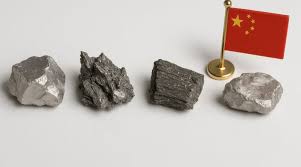
Nearly four miles beneath the sunlit surface of the Pacific Ocean, a quiet but monumental experiment is about to begin. Early next year, a Japanese research ship will lower a long, mechanical arm into the ocean deep, aiming to grasp not just mud, but a measure of economic independence.
Japan is planning to mine for rare Earth minerals in the seabed on one of the most remote stages on Earth, near a speck of land called Minamitorishima. It is a direct challenge to a decades-long status quo, where China's dominance over rare earth elements has cast a long shadow over global technology and defense industries. This is the world's first sustained attempt to mine these critical minerals from the deep seabed.
Key points:
Japan will conduct the world's first sustained deep-sea mining test for rare earth-rich mud from depths of 6,000 meters near Minamitorishima Island in early 2026.
The project, led by the Japan Agency for Marine-Earth Science and Technology (JAMSTEC), aims to extract 350 metric tons of mud per day in a test of both technical feasibility and environmental impact.
Success in 2026 would lead to a larger demonstration project in 2027, forming the cornerstone of a strategy to build a domestic supply chain free from foreign export controls.
The rare earths in question, like neodymium and dysprosium, are scientifically crucial for the permanent magnets in electric vehicle motors, wind turbines, and advanced military hardware.
The operation has already been shadowed by geopolitical tension, with a Chinese naval fleet entering the area during earlier Japanese survey work, highlighting the strategic importance both nations attach to these underwater resources.
The scientific prize in the deep-sea mud
To understand why Japan is venturing into such a hostile environment, one must first understand the unique atomic magic of rare earth elements. Despite their name, they are relatively abundant in the Earth's crust, but they are rarely found in concentrated, economically viable deposits. Their power lies in their electron configuration. Elements like neodymium and dysprosium possess unpaired electrons that generate powerful magnetic fields. When alloyed with iron and boron, they create sintered neodymium-iron-boron magnets—the strongest known type of permanent magnet.
These magnets are not just strong; they are efficient and compact. They are the invisible force inside the whisper-quiet motors of electric vehicles, enabling greater range and power. They are inside the generators of direct-drive wind turbines, converting breeze into electricity without the need for heavy gearboxes. In defense, they guide precision munitions and power the drives of naval warships. The mud on the seafloor near Minamitorishima is exceptionally rich in these specific elements, a subaqueous treasure trove that Japanese researchers estimate could meet global demand for centuries. Unlike some terrestrial mines, this deep-sea mud also reportedly lacks radioactive thorium and uranium byproducts, potentially simplifying the refining process and reducing environmental headaches.