










Breaking News
 Mike Benz just examined Epstein files and he's got a telltale theory…
 The Ever-Widening War
 BREAKING GLOBAL EXCLUSIVE: Former High-Level CIA Operative Patrick Byrne Reveals That...
 Junk-food Bans for SNAP Users To Begin in January
Top Tech News
 EngineAI T800: Born to Disrupt! #EngineAI #robotics #newtechnology #newproduct
 This Silicon Anode Breakthrough Could Mark A Turning Point For EV Batteries [Update]
 Travel gadget promises to dry and iron your clothes – totally hands-free
 Perfect Aircrete, Kitchen Ingredients.
 Futuristic pixel-raising display lets you feel what's onscreen
 Cutting-Edge Facility Generates Pure Water and Hydrogen Fuel from Seawater for Mere Pennies
 This tiny dev board is packed with features for ambitious makers
 Scientists Discover Gel to Regrow Tooth Enamel
 Vitamin C and Dandelion Root Killing Cancer Cells -- as Former CDC Director Calls for COVID-19...
 Galactic Brain: US firm plans space-based data centers, power grid to challenge China



Next Year's Election Is A Choice Between Peace & War, Warns Hungarian PM Orbán
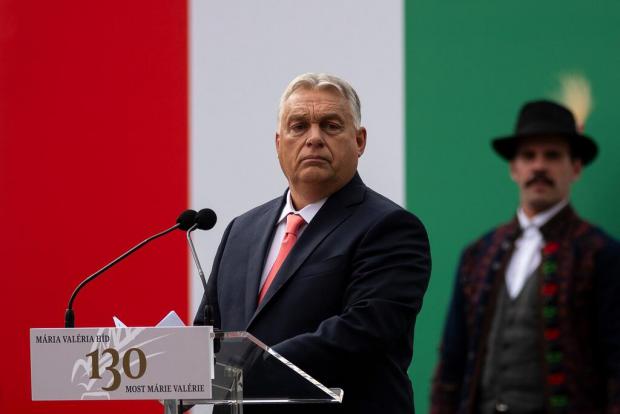
Speaking on TV2's Tények program, he said European leaders at a summit over the weekend had effectively convened a "war council," with speeches focused on defeating Russia, and argued that a growing divide has emerged between the United States and Europe since the inauguration of Donald Trump in January.
"Previously, it was unthinkable within NATO that the United States would say no to something and European states would still go ahead and do it," the prime minister said.
Orbán warned Europe is much closer to war than most Hungarians realize, noting what he described as a German war plan to seize Russian currency reserves held in Western Europe, a move he claimed that would openly turn Europe into Russia's enemy.
According to the prime minister, Hungary will now have a war-free Christmas, but the danger has not passed. He said the European Union wants to provide Ukraine with €90 billion over two years, despite having no funds of its own, and is therefore seeking loans from banks that he claimed would never be repaid.
Orbán said Slovakia, the Czech Republic, and Hungary refused to provide guarantees for the borrowing. "This would have cost Hungarian families 400 billion forints. We will not pay that — full stop," he said.
Orbán argued that Europe has more private-sector assets in Russia than the value of the funds it would have seized, adding that Hungary also holds significant corporate assets there. He expressed hope that U.S.-Russian negotiations would succeed despite what he called counter-campaigning by Europe's political elite. He claimed that anti-war views now dominate Western public opinion as the economic costs of the conflict rise.
"From a Hungarian perspective, war is the most horrific thing that can happen," he said. "We know how a war consumes a nation's future and decades of hard work."
The prime minister also argued that financial interests are pushing politicians toward conflict. He said bankers were driving Europe toward war, as they did before World War I, and claimed that within months the divide between Hungarian and European politics would become even clearer. Germany, he said, is pro-war, as is the European People's Party, while his administration in Budapest represents what he called the party of peace.
"We will not allow ourselves to be dragged into war," Orbán said, adding that Europe's stated aim of being ready for war with Russia by 2030 turns Hungary's upcoming elections into a choice between peace and war. "We — and I personally — will succeed in keeping Hungary out of the war," he said.