










Breaking News
 Why men stopped going to church
 Nullify the Police State: The People's Veto to Rein in a Lawless Government
 Former Top CDC Officials Hired by California to Invalidate CDC's New Public Health Policies
 James O'Keefe Reveals Shocking Details of Army of Anti-ICE Agitators...
Top Tech News
 Researchers who discovered the master switch that prevents the human immune system...
 The day of the tactical laser weapon arrives
 'ELITE': The Palantir App ICE Uses to Find Neighborhoods to Raid
 Solar Just Took a Huge Leap Forward!- CallSun 215 Anti Shade Panel
 XAI Grok 4.20 and OpenAI GPT 5.2 Are Solving Significant Previously Unsolved Math Proofs
 Watch: World's fastest drone hits 408 mph to reclaim speed record
 Ukrainian robot soldier holds off Russian forces by itself in six-week battle
 NASA announces strongest evidence yet for ancient life on Mars
 Caltech has successfully demonstrated wireless energy transfer...
 The TZLA Plasma Files: The Secret Health Sovereignty Tech That Uncle Trump And The CIA Tried To Bury



Americans' confidence in US economy sinks to lowest level since 2014 despite Trump tariff claims
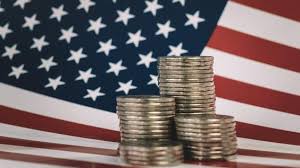
The sharp drop in consumer confidence has pushed the mood of US households below even the darkest days of the Covid pandemic, raising fresh concerns that the economy may be heading towards a recession.
Confidence falls to decade-low
Data released on Tuesday showed the Conference Board's consumer confidence index fell to 84.5 in January 2026, down from 94.2 in December. This is the lowest reading since May 2014 and below all expectations in a Bloomberg survey of economists.
The index has now slipped beneath its lowest levels recorded during the 2020–21 pandemic period, underlining the scale of public anxiety.
Recession fears deepen
A key measure tracking Americans' short-term expectations for income, business conditions and the job market dropped sharply by 9.5 points to 65.1. This is well below the 80 mark that typically signals an impending recession.
Notably, this expectations gauge has remained under 80 for 12 consecutive months, reinforcing fears that economic weakness may persist.
Consumers' assessment of their current situation also worsened, falling 9.9 points to 113.7, suggesting unease about both present conditions and the future outlook.
Inflation and tariffs weigh on sentiment
"Confidence collapsed in January, as consumer concerns about both the present situation and expectations for the future deepened," said Dana Peterson, chief economist at the Conference Board.
"All five components of the index deteriorated, pushing confidence to its lowest level since May 2014, even below its pandemic-era lows," she added.
Survey responses pointed to growing worries over inflation, particularly fuel and grocery prices. Mentions of tariffs, trade, politics, the labour market, health insurance and war also rose sharply during the month.