










Breaking News
 Planned Muslim mega city in the heart of Texas wins huge victory and gets a step closer...
 Donald Trump Jr in talks to host Apprentice reboot
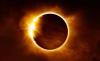 The longest solar eclipse of the century is coming: Day will turn into night and it won't return
US Economy Expands at 2.0 Percent in 2026 Q1, a Look at the Numbers
Top Tech News
 Researcher wins 1 bitcoin bounty for 'largest quantum attack' on underlying tech
 Interceptor-Drone Arms-Race Emerges
 A startup called Inversion has introduced Arc, a space-based vehicle...
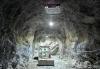 Mining companies are using cosmic rays to find critical minerals
 They regrew a severed nerve - by shortening a bone.
 New Robot Ants Work Like Real Insects To Build And Dismantle On Their Own
 Russian scientists 'are developing the world's first drug to delay ageing' months after
 Sam Altman's World ID Expands Biometric Identity Checks
 China Tests Directed Energy Beam That Recharges Drones Mid-Flight
 Jurassic Park might arrive sooner than expected, just with Dinobots.



The longest solar eclipse of the century is coming: Day will turn into night and it won't return
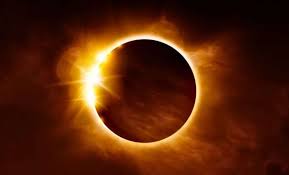
On a blistering August morning, the Sun will simply vanish. Across a narrow corridor from the Straits of Gibraltar to the Arabian Peninsula, the Moon will slide into position and blot out the solar disk, turning midday into deep twilight. For anyone stationed inside that path, the most significant eclipse of the century will be underway.
The event is the total solar eclipse of August 2, 2027, and NASA has confirmed it as the longest such eclipse of the 21st century. Calculations published by the agency's Goddard Space Flight Center peg maximum totality at 6 minutes and 23 seconds. No other total solar eclipse this century reaches that mark.
The last time land-based observers experienced totality this long was 1991. NASA's data places the next comparable opportunity in 2114, so the 2027 eclipse sits at a rare intersection of celestial timing and geographic reach.
The mechanism driving the extended duration is straightforward. TheMoon will be near perigee, its closest approach to Earth, appearing large enough to cover the Sun completely for an unusually long stretch. Meanwhile, the point of greatest eclipse lands in a region where the Sun hangs nearly overhead, which adds precious seconds to the shadow's sweep across the surface.
That region is North Africa. The central line carves through southern Spain, northern Morocco, Algeria, Tunisia, Libya, and Egypt before crossing into Saudi Arabia and Yemen. Durations grow longer from west to east. Tarifa, at Spain's southern tip, gets 4 minutes and 39 seconds. Tangier, just across the Strait, sees 4 minutes and 50 seconds. By Benghazi, Libya, totality reaches 6 minutes and 7 seconds. Luxor, Egypt, records 6 minutes and 19 seconds. Along the Red Sea coast, the figure hits 6 minutes and 20 seconds, just shy of the theoretical maximum.
The Sky Guarantee That Sets This Eclipse Apart
Duration is only part of the appeal. The other factor reshaping eclipse-chasing plans is meteorology. August in North Africa brings brutal heat, but it also delivers virtually cloudless skies along the zone of longest totality.
Jay Anderson, a Canadian meteorologist who produces eclipse climate analyses for Eclipsophile, told Space.com that eastern Libya and western Egypt face "no chance of cloud." At Luxor, he said, average cloud cover in August is 0.7 percent. The worst observers are likely to encounter is thin cirrus riding the jet stream.
Dust, not cloud, may be the real visibility concern. Anderson noted a compensating effect, however. The same dry desert air that pushes midday temperatures to 43 degrees Celsius will respond fast when sunlight cuts off. "The temperature will probably drop like a stone when the eclipse happens," he said.