










Breaking News
 War on Steak: Climate Hysteria, Fake Meat, and the Push to Change Your Diet
 The #1 Most DAMAGING Carb on Earth (Is NOT Sugar)
 In March 2026, Bank of America settled with Jeffrey Epstein's survivors.
 Breaking News: Chairman Milhoan Confirms that ACIP Disbanded in Response to Federal Court...
Top Tech News
 Scientists at the Harbin University of Science and Technology have pioneered a sophisticated...
 Researchers have developed a breakthrough "molecular jackhammer" technique...
 Human trials are underway for a drug that regrows human teeth in just 4 days.
 Singularity Update: You Have No Idea How Crazy Humanoid Robots Have Gotten
 Musk Whips Out 'Macrohard' In Disruptive Tesla-xAI Bid To Shaft Software Companies
 This Bonkers Folding X-Plane Is One Step Closer to Hitting the Skies
 Smart 2-in-1 digital microscope goes desktop or handheld as needed
 Human Brain Cells Merge With Silica To Play DOOM
 Will Yann LeCun Provide The Next Breakthrough In AI?
 Human Brain Cells Merge With Silica To Play DOOM



Damn These Touchscreens!
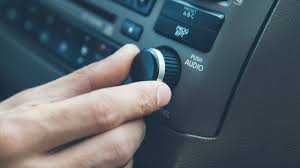
There is a special room in Hell – assuming such a place exists – for the person who decided it would be a good idea to replace knobs and buttons and switches with a big glowing screen you have to tap and "scroll" through while you're trying to drive in order to get such basic operations as changing the station you're listening to or turning up or down the volume done.
Operations that for decades were easily performed without any need to take your eyes off the road – because it could be done by feel – have become not just needlessly aggravating but needlessly dangerous – as well as dissonant. We are told – we are lectured – that it is unsafe to tap and swipe at our smartphones while driving yet doing exactly that becomes "safe" somehow when the screen is embedded in the dash (or erupting from it, like a glowing Pop Tart).
Since it is obviously not safe, some of these screens prevent you from performing certain operations – changing channels, using the GPS – while the car is moving if you try to perform them while the car is moving.
There are cameras in the car that are watching you, in case you did not know – and when they see that you are looking away from straight ahead, you will in some cars see a helpful helperson advisory nanny pop up on the screen that tells you the system has decided to stop responding to your tapping and swiping until you either stop the vehicle or stop looking at the screen.
For safety!
So now you're additionally frustrated – by a system that's awkward to use that prevents you from using it.
Normally, the idea is to improve the functionality of things, especially control interfaces. But a problem arises when further improvement is not possible because the existing interface works so well. How do you fix what's not broken?
Well, you break it.
It is one thing to make a stereo that sounds better than an AM only radio and to make a sound system that sounds better than just a stereo. Just as it is one thing to make an engine more powerful, more efficient and produce less in the way of actually harmful combustion byproducts.
It is another thing to design something that works better for its intended task than a knob that you turn to the left or the right to increase of decrease the volume or to change stations on the sound system. As in it probably cannot be done. It certainly hasn't been done yet.
So why have they changed what worked?
There are several reasons. The first is the dishonest reason. They will tell you it does work better, which is obviously false. Try it – time it – for yourself and see. How long does it take to reach over and turn the knob to the left or right to change channels? You'll probably be done before you could even tap/swipe/scroll to the correct menu to tap up/down to get to to the icon that you tap to make the adjustment you wanted. When you do finally find it, the fine adjustment is often harder to make. The volume goes up a little too much or not quite enough; tap/swipe some more until it's right. The lag time in between your tapping and swapping and the thing responding is another metric of functional inferiority. There is no lag when you rotate a knob – or push a button or hit a switch.