










Breaking News
 The Middle East Security Map Is CHANGING FAST! Saudi Arabia, Pakistan & Turkey Move Toward...
 Report: US Troops and Diplomats Evacuating Posts Across the Middle East
 The USDA's $8 Billion Farmer Bailout Is Communism Disguised as Relief
 Sell The Bailout: Skydance Tumbles As Musk's $1 Billion Check Reminds Everyone Paramount...
Top Tech News
 Chicago Opens First "Teacher-Free" AI School as Global Push Accelerates
 Solar Panels Are Doing Something Nobody Expected
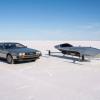 DeLorean climbs skyward to race electric flying cars
 Atari's 800XL returns with a keyboard, cartridges and BASIC
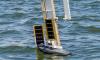 Bioinspired robot airdrops into remote waters via morphing wing-sail
 Anduril interceptor adapts to emerging threats via swappable stages
 I Built a Website to Expose Solar and Battery Scams
 Whistleblower Issues Dire Warning: Rogue AI, Hacking Nuclear Programs...
 Multi-material insulation delivers up to 10,000 x the stiffness
 Anduril's plan to save US sub edge from China's undersea surge



Cuba Sends 'Secret Letter' to Trump – Report
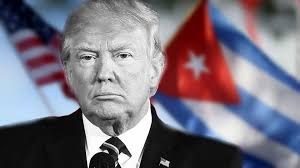
The reported message, which was ultimately intercepted, was meant to bypass US Secretary of State Marco Rubio, who has pursued a policy of regime change on the island.
The move was orchestrated by Raul Rodriguez Castro, grandson and chief aide of 94-year-old former Cuban President Raul Castro, who is widely considered one of the island's most powerful figures, the report said. It added that the letter bore an official Cuban government seal and was formatted as a diplomatic note.
The letter proposed economic and investment agreements alongside sanctions relief, and warned that Havana was bracing for a possible US military incursion, an unnamed US official told the paper.
The courier, Roberto Carlos Chamizo Gonzalez, 37, a luxury tourism and high-end car rental entrepreneur based in Havana, was stopped by security officers at Miami International Airport, who confiscated the letter and sent him back to Cuba.
The paper suggested that the move appeared designed to circumvent US Secretary of State Marco Rubio, a son of Cuban immigrants and Washington's most forceful advocate for maximum pressure on Havana.
Ricardo Herrero, executive director of the Washington-based Cuba Study Group, suggested that an attempt to sidestep the top US diplomat was "downright foolish and bound to backfire," adding that "it's worse to go with an unknown with no personal relationship to the president, which makes it look more foolish."
The back-channel bid comes as Cuba is reeling under its worst economic crisis in decades. After US forces kidnapped Venezuelan leader Nicolas Maduro in January 2026, Washington severed Cuba's main oil lifeline from Caracas and imposed a near-total fuel blockade. The island is also struggling with recurring complete blackouts.
Trump has labeled Cuba "a failing nation", threatened a "friendly takeover," and has said recently that the US "may stop by Cuba" after the war in Iran. Havana has warned it is ready for any American attack.