










Breaking News
 UAE Leaves OPEC and OPEC+ in Huge Blow to the Cartel. What's That Mean?
 Grand Theft World Podcast 284 | Puppeteers of Fear with Guest Patrick Henry Barnes
 Hope for America
 Three ways South Korea can buy alliance insurance
Top Tech News
 Researcher wins 1 bitcoin bounty for 'largest quantum attack' on underlying tech
 Interceptor-Drone Arms-Race Emerges
 A startup called Inversion has introduced Arc, a space-based vehicle...
 Mining companies are using cosmic rays to find critical minerals
 They regrew a severed nerve - by shortening a bone.
 New Robot Ants Work Like Real Insects To Build And Dismantle On Their Own
 Russian scientists 'are developing the world's first drug to delay ageing' months after
 Sam Altman's World ID Expands Biometric Identity Checks
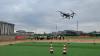 China Tests Directed Energy Beam That Recharges Drones Mid-Flight
 Jurassic Park might arrive sooner than expected, just with Dinobots.



Three ways South Korea can buy alliance insurance

The case for South Korea hedging its relationship with the United States may have become harder to dismiss.
Washington's trade policies and the economic consequences of the US-Israeli war on Iran have raised the cost of close alignment at the same time they have weakened confidence in US commitments.
Seoul has options short of rupture that include joining regional trade frameworks, arming Ukraine directly and pursuing its own diplomacy with Iran on energy shipments.
"While the biggest threat to the alliance remains North Korea, the biggest challenge to the alliance now comes from the United States," argues long-time Korea watcher Bruce Klingner.
"Having bullied Seoul into a disadvantageous trade deal that violated the US-South Korea free trade agreement and the US Constitution, the Trump administration is demanding more – and promising less to its security and economic partners."
Klinger said that the United States "may have degraded military deterrence by undermining the perception – in the minds of both allies and opponents – that Washington is a dependable security partner."
This sense of unreliability is hardly confined to South Korea – it is felt by all US allies. As Washington Post columnist Fareed Zakaria wrote recently, the United States has used allied security dependence "to squeeze them hard."
The response is not to break ties with the United States, writes prominent British historian and commentator Lawrence Freedman, "but to accept that our interests are no longer as close as they once were, and that in current circumstances it cannot be a high priority to accommodate American wishes."
The result, wrote Zakaria, is that allies "have decided to buy insurance, to protect themselves from an unreliable America."
In that spirit, below are three ideas for South Korea to develop an insurance policy against US uncertainty.
Accelerate application to join CPTPP
The most urgent – and, in some ways, easiest – step toward greater independence for South Korea is to expedite its application to join the Comprehensive and Progressive Agreement for Trans-Pacific Partnership (CPTPP).