










Breaking News
 Donald Trump Jr in talks to host Apprentice reboot
 The longest solar eclipse of the century is coming: Day will turn into night and it won't return
US Economy Expands at 2.0 Percent in 2026 Q1, a Look at the Numbers
 AI Provided Nearly All the GDP Growth in the First Quarter
Top Tech News
 Researcher wins 1 bitcoin bounty for 'largest quantum attack' on underlying tech
 Interceptor-Drone Arms-Race Emerges
 A startup called Inversion has introduced Arc, a space-based vehicle...
 Mining companies are using cosmic rays to find critical minerals
 They regrew a severed nerve - by shortening a bone.
 New Robot Ants Work Like Real Insects To Build And Dismantle On Their Own
 Russian scientists 'are developing the world's first drug to delay ageing' months after
 Sam Altman's World ID Expands Biometric Identity Checks
 China Tests Directed Energy Beam That Recharges Drones Mid-Flight
 Jurassic Park might arrive sooner than expected, just with Dinobots.



Schiff on Resource Talks: Oil Will Stay High, the Fed Blew It
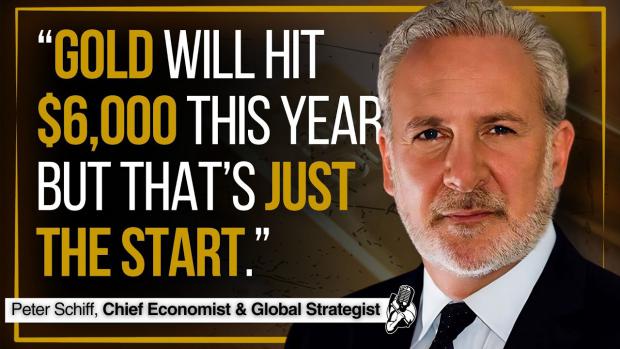
He argues oil is likely to remain elevated even if a war ends, warns that inflation is driven by monetary responses rather than commodity shocks alone, and urges investors to move out of dollars and Treasuries into gold as a hedge. He also lays out a stark Dow-to-gold forecast for the next few years.
He opens by warning that investors are banking on a quick peace and a collapse in energy prices, and that two mistakes are being made at once: underestimating geopolitical risk and ignoring structural pressures that keep oil high:
But if it turns out that this optimism is unfounded and the war is not over as quickly as people think or hope, the impact on oil prices is going to be greater. But I also think that people are wrong to believe that oil prices are just going to come crashing down as soon as we have a peace deal. I think that oil is going to stay higher for a lot longer and the price was going to go up anyway, even if we didn't have a war.
Peter clarifies a key macro distinction most pundits miss: an energy shock by itself tends to cause recessionary pressures; inflation becomes broad only after central banks respond with loose money. He points out that consumer inflation expectations remain elevated—even as the Fed is not yet easing:
And that's why rising oil prices, they're not inflationary, they're recessionary. What's inflationary is how a central bank responds to that. So if rising oil prices cause recession and then central banks print a lot of money and cut rates, that's what causes the inflation. Now that causes all the prices to go up, not just the energy prices and energy-related prices. And yet we've got consumer inflation expectations running at around 5% in the US, which is well above target, even as the Fed isn't easing.
That leads him to a practical recommendation: exit paper money and interest-bearing government debt and favor a real, monetary hedge. When he talks about consumer inflation here he's referring to measures like the Consumer Price Index (CPI), and he argues that rising inflation expectations act like a rate cut if nominal rates don't move:
I think that's why people need to get out of dollars and out of treasuries and people should be buying gold. Gold was sold in part because the Fed wasn't cutting. But those traders were overlooking the fact that the market was doing the cutting, that inflation going up is the equivalent of rates coming down if rates stay the same. Because it's real rates that are the driver here. And if inflation doubles, then real rates are cut in half.
Peter then turns to the Fed's policy record, blaming Jerome Powell for keeping rates too low for too long and for tolerating above-target inflation rather than acting decisively while the problem was smaller:
Powell left interest rates way too low for way too long. When it was obvious that the inflation genie was out of the bottle, he kept rates at zero. And you should have started raising a lot sooner. And then he even came up with this idea: even when inflation initially got above 2 percent, instead of immediately, "OK, we're above our target, let's cut rates," he was like, "oh, you know, we'll let it stay above two for a while."