










Breaking News
 UAE's OPEC exit hands Asia a petroyuan moment
 Iran President Pezeshkian weighs Araghchi ouster for 'defying orders' in US talks
 Stephen Miller: This scandal will 'rock the CORE' of politics
 For decades, many parts of Iran have struggled with severe drought.
Top Tech News
 CANCER HAS BEEN CURED
 "This is the first synthetic species," microbiologist J. Craig Venter told 60 Minutes'
 Humanoid robots are hitting the factories at an increasing pace
 Microsoft's $400 Billion Mistake Is Now a $200 Phone With Zero Tracking
 Turn Sand to Stone With Vinegar. Stronger Than Steel. Hidden Since 1627
 This is a bioprinter printing with living human cells in real time
 The remarkable initiative is called The Uncensored Library,...
 Researcher wins 1 bitcoin bounty for 'largest quantum attack' on underlying tech
 Interceptor-Drone Arms-Race Emerges
 Mining companies are using cosmic rays to find critical minerals



UAE's OPEC exit hands Asia a petroyuan moment
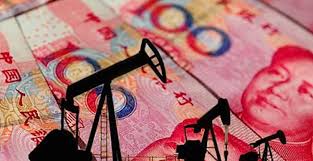
On May 1, 2026, the United Arab Emirates formally departed from the Organization of the Petroleum Exporting Countries (OPEC), ending nearly six decades of membership.
Most analysis has fixated on what this means for crude prices, supply discipline and Saudi Arabia's burden of stabilization. These are real questions but secondary ones. The deeper consequence is monetary, and it reshapes Asia far more than it reshapes Vienna.
For half a century OPEC has functioned not merely as a production cartel but as the institutional anchor of the petrodollar system. The 1974 understanding between Washington and Riyadh — Gulf oil priced and settled in dollars in exchange for American security guarantees — was operationalized through OPEC's pricing conventions.
Membership in the organization meant accepting dollar-denominated benchmark contracts, dollar-recycled current account surpluses and dollar-mediated trade with consumers.
Any member that experimented seriously with alternative settlement currencies invited friction with both the cartel's coordination mechanisms and its largest external patron. This is why the petroyuan, despite a decade of Chinese institutional investment, has remained largely confined to symbolic transactions. The structural ceiling was OPEC itself.
The UAE has spent eight years quietly building the infrastructure to escape that ceiling. ADNOC began listing Murban crude futures on ICE Futures Abu Dhabi in 2020, creating a regional benchmark independent of Brent and WTI. The Emirates joined BRICS in January 2024, gaining institutional access to expanded ruble, rupee and yuan settlement frameworks.
Most consequentially, the UAE became a founding partner in Project mBridge, the multi-central-bank digital currency platform piloted under the Bank for International Settlements that enables real-time cross-border settlement among the central banks of China, Hong Kong, Thailand, the UAE and, in observer status, Saudi Arabia.