










Breaking News
 What The Hell Is Happening? w/ Charlie Robinson
 YOUR GROCERY BILL JUST GOT WORSE 2026 East Coast Fruit Apocalypse
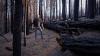 New Investigation Exposes How Much Roundup Is Being Sprayed in Northern California's Forests
 How Money Acquires Its Value
Top Tech News
 New York Mandates Kill Switch and Surveillance Software in Your 3D Printer ...
 Cameco Sees As Many As 20 AP1000 Nuclear Reactors On The Horizon
 His grandparents had heart disease.
At 11, Laurent Simons decided he wanted to fight aging.
His grandparents had heart disease.
At 11, Laurent Simons decided he wanted to fight aging.
 Mayo Clinic's AI Can Detect Pancreatic Cancer up to 3 Years Before Diagnosis–When Treatment...
A multi-terrain robot from China is going viral, not because of raw speed or power...
 The World's Biggest Fusion Reactor Just Hit A Milestone
 Wow. Researchers just built an AI that can control your body...
 Google Chrome silently installs a 4 GB AI model on your device without consent
 The $5 Battery That Never Dies - Edison Buried This 100 Years Ago
 That is not a real fish. IT'S A ROBOT.


New Investigation Exposes How Much Roundup Is Being Sprayed in Northern California's Forests
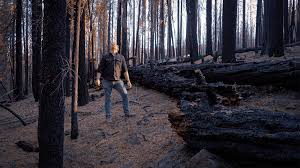
In remote Northeast California, about 10 miles outside the lumber mill town of Chester and a half-hour's drive from the old hunting cabin I bought and fixed up about a decade ago, I steer my old Toyota Tacoma down a bumpy dirt road to where the Lassen National Forest gives way to private timberland. Lilly rides shotgun.
We'd come to this exact spot seven years ago. Lilly, my sharp-eyed border collie, had jumped out of the truck and chased a rabbit through a meadow of knee-high grass, returning covered in mud and burrs. The landscape was straight out of an L.L.Bean catalog: a flower-dotted meadow buzzing with life. Douglas firs, incense cedars, and some of the tallest sugar pines on the planet sheltered protected species ranging from gray wolves to Pacific fishers and northern goshawks. The Sierra Nevada red fox, one of California's rarest mammals, was known to live nearby, amid the vast patchwork of private and public lands. The Lassen area is where I come to reset, forage for wild mushrooms, and let stress evaporate.
But today, I'm looking out over a barren, sun-bleached expanse that stretches across the former meadow and up the sides of denuded mountains as far as the eye can see. No birds. No animals. No insects. No big trees. Just some waist-high piles of volcanic rock, a nod to the still-active Lassen Peak nearby. It is eerily quiet—desolate. The Dixie Fire roared through here in July 2021, burning nearly 1 million acres. The Park Fire three years later took out another 430,000 acres nearby. But the fires aren't directly responsible for what I'm seeing today. People did this.
Just a few minutes down the road, nature has crept back to life. There, I saw vibrant green mountain whitethorn bushes, rabbitbrush, and purple-tinged bull thistles, with energetic bees bopping from flower to flower. The towering trees were gone, but new saplings abounded—cedars, pines, firs, and more—scattered randomly amid the greenery, already a foot or two high. No such verdant revival is visible on the private timberland before me. No bees, no flowers—it's a virtual dead zone where the only life consists of row upon row of manually planted, tightly packed conifer saplings, all less than a foot tall.
This is because, unbeknownst to most people, logging companies and the US Forest Service have been spraying massive amounts of herbicide in clear-cut and fire-ravaged forests of California—and throughout the nation. And not just any herbicide, but glyphosate, a potent and problematic weed killer best known by the brand name Roundup.
This once-idyllic landscape, spanning tens of thousands of acres, is among California's most heavily sprayed forest areas. The Pacific Crest Trail—a hiking route immortalized in the Hollywood movie Wild, starring Reese Witherspoon—runs straight through it. Yet thanks to all the chemicals, it remains a moonscape even now, nearly five years after the Dixie Fire.