










Breaking News
 $649 Dirt Cheap Server Rack Battery! You won't believe what I found inside!
 Farmers Abandon Wheat Crop, Igniting Global Food Shortage Fears
 Cancer Is a Parasite - Dr. William F. Supple Jr with Dr Sherri Tenpenny (May 14 @ 5 pm MDT)
 The Cost of Money: Coinage, Fiat Power, and the Quiet Corruption of Value
Top Tech News
 US To Develop Small Modular Nuclear Reactors For Commercial Shipping
 New York Mandates Kill Switch and Surveillance Software in Your 3D Printer ...
 Cameco Sees As Many As 20 AP1000 Nuclear Reactors On The Horizon
 His grandparents had heart disease.
At 11, Laurent Simons decided he wanted to fight aging.
His grandparents had heart disease.
At 11, Laurent Simons decided he wanted to fight aging.
 Mayo Clinic's AI Can Detect Pancreatic Cancer up to 3 Years Before Diagnosis–When Treatment...
A multi-terrain robot from China is going viral, not because of raw speed or power...
 The World's Biggest Fusion Reactor Just Hit A Milestone
 Wow. Researchers just built an AI that can control your body...
 Google Chrome silently installs a 4 GB AI model on your device without consent
 The $5 Battery That Never Dies - Edison Buried This 100 Years Ago



The Cost of Money: Coinage, Fiat Power, and the Quiet Corruption of Value
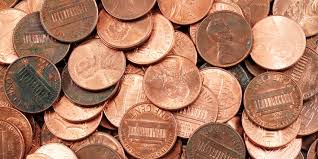
The American penny collapsed under that weight—3.69 cents for every penny minted. Thus, it cost multiples of its face value to produce—a financial contradiction sustained for years out of habit and political inertia. Now the nickel stands in the same position, costing far more to mint than it is worth. This is not a marginal accounting problem, it is a visible symptom of a system that no longer disciplines itself.
In any private enterprise, producing goods at three times their sale price would be unsustainable. In public finance, it persists year after year. The losses are absorbed, diffused across taxpayers, and hidden within a monetary system capable of expanding to cover them. The question is not why it happens once, the question is why it continues. The answer leads directly to the structure of modern money and to the role of the Federal Reserve.
Fiat currency is money by decree. It has no intrinsic value, no material anchor, no origination from market processes, no constraint beyond policy and confidence. That design offers flexibility, but it also removes the natural limits that once enforced discipline. When coins were made of silver or gold, their production costs imposed a boundary. You could debase them—as empires often did—but not without consequence. Today, the constraint is political will, and that is far easier to erode.