










Breaking News
 I Tracked Down the Hidden Workers Secretly Powering ChatGPT
 AI is Sending People into Psychosis
 YPF launched the largest crude oil export program in Argentina's history...
 Mining groups and rural unions clashed with law enforcement Thursday in La Paz, Bolivia...
Top Tech News
 Sodium Ion Batteries Can Reach 100 Gigawatt Per Hour Per Year Scale in 2027
 Juiced Bikes proves capable electric motorcycles don't have to cost a lot
 Headlight projectors turn your car into a drive-in theater
 US To Develop Small Modular Nuclear Reactors For Commercial Shipping
 New York Mandates Kill Switch and Surveillance Software in Your 3D Printer ...
 Cameco Sees As Many As 20 AP1000 Nuclear Reactors On The Horizon
 His grandparents had heart disease.
At 11, Laurent Simons decided he wanted to fight aging.
His grandparents had heart disease.
At 11, Laurent Simons decided he wanted to fight aging.
 Mayo Clinic's AI Can Detect Pancreatic Cancer up to 3 Years Before Diagnosis–When Treatment...
A multi-terrain robot from China is going viral, not because of raw speed or power...
 The World's Biggest Fusion Reactor Just Hit A Milestone


Pax Silica: Who Owns the Rails of the AI Civilization?
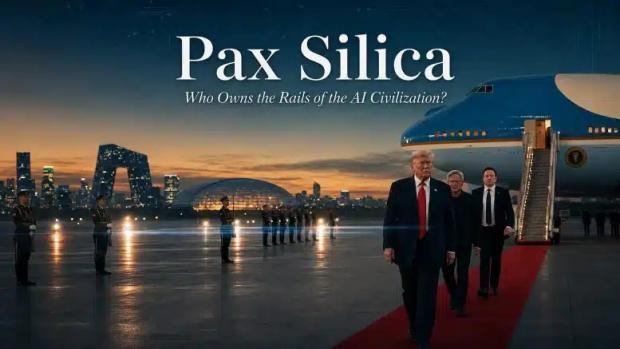
The twentieth-century order ran on oil, steel, sea lanes, central banks, and military alliances. The twenty-first-century order is being reorganized around compute, semiconductors, critical minerals, energy, data centers, logistics corridors, payment rails, and trusted capital.
That is not rhetoric. It is now policy architecture.
The State Department calls it Pax Silica: a U.S.-led AI and supply-chain framework built around secure technology supply chains, economic security, artificial intelligence, critical minerals, semiconductors, energy, manufacturing, infrastructure, and "trustworthy systems." The declaration signed in Washington on December 12, 2025 described the objective as building secure, prosperous, and innovative global technology supply chains. Its founding signatories included the United States, Australia, Japan, South Korea, the United Kingdom, Singapore, and Israel. Its language is revealing: reliable supply chains are "indispensable" to economic security; artificial intelligence is a "transformative force"; and the AI revolution is reorganizing the world economy and global supply chains.
This week, that architecture moved from declaration to diplomacy.