










Breaking News
 Shooters And Motives Revealed In San Diego Mosque Shooting That Killed Three
 Today's The Day... Will Massie Be Ousted?
 Is Hantavirus a Scam? Video Shows Some Workers in Hazmat Suits, But Others Are Not
 The War on Crypto Was Always About Control
Top Tech News
 Cars Are Fast Becoming Dystopian Prison Pods...
 Our Emergency Water Plan Wasn't Good Enough - So We Built This
 Sodium Ion Batteries Can Reach 100 Gigawatt Per Hour Per Year Scale in 2027
 Juiced Bikes proves capable electric motorcycles don't have to cost a lot
 Headlight projectors turn your car into a drive-in theater
 US To Develop Small Modular Nuclear Reactors For Commercial Shipping
 New York Mandates Kill Switch and Surveillance Software in Your 3D Printer ...
 Cameco Sees As Many As 20 AP1000 Nuclear Reactors On The Horizon
 His grandparents had heart disease.
At 11, Laurent Simons decided he wanted to fight aging.
His grandparents had heart disease.
At 11, Laurent Simons decided he wanted to fight aging.
 Mayo Clinic's AI Can Detect Pancreatic Cancer up to 3 Years Before Diagnosis–When Treatment...



Open Records Laws Reveal ALPRs' Sprawling Surveillance...
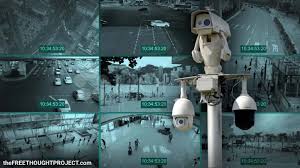
Reporters, community advocates, EFF, and others have used public records laws to reveal and counteract abuse, misuse, and fraudulent narratives around how law enforcement agencies across the country use and share data collected by automated license plate readers (ALPRs). EFF is alarmed by recent laws in several states that have blocked public access to data collected by ALPRs, including, in some cases, information derived from ALPR data. We do not support pending bills in Arizona and Connecticut that would block the public oversight capabilities that ALPR information offers.
Every state has laws granting members of the public the right to obtain records from state and local governments. These are often called "freedom of information acts" (FOIAs) or "public records acts" (PRAs). They are a powerful check by the people on their government, and EFF frequently advocates for robust public access and uses the laws to scrutinize government surveillance.
But lawmakers across the country, often in response to public scrutiny of police ALPRs, are introducing or enacting measures aimed at excluding broad swaths of ALPR information from disclosure under these public records laws. This could include whole categories of important information: general information about the extent of law enforcement use; details on ALPR sharing across policing agencies; data on the number of license plate scans conducted, where they happened, and how many "hits" for license plates of interest actually occur; analyses on how many false matches or other errors occur; and images taken of individuals' own vehicles.
No thanks. Public records and public scrutiny of ALPR programs have shown that people are harmed by these systems and that retained ALPR data violates people's privacy. In this moment, lawmakers should not be completely cutting off access to public records that document the abuses perpetuated by ALPRs.
Transparency with privacy
To be sure, there are legitimate concerns about wholesale public disclosure of raw ALPR data. After all, many of the harms people experience from these systems are based on the government's collection, retention, and use of this information. Public transparency rights should not exacerbate the privacy harms suffered by people subjected to ALPR surveillance. But many current proposals do not address legitimate privacy concerns in a measured way, much less seek to harmonize people's privacy with the public's right to know.
There is a better path to balancing privacy and transparency rights than outright bans or total disclosure.
Any legislative proposal concerning public access to ALPR data must start with this reality: ALPR data is deeply revealing about where a person goes, and thus about what they are doing and who they are doing it with. That's a reason why EFF opposes ALPRs. It is dangerous that the police have so much of our ALPR information. Even worse for our privacy would be for police to disclose our ALPR information to our bosses, political opponents, and ex-friends. Or to surveillance-oriented corporations that would use our ALPR information to send us targeted ads, or monetize it by selling it to the highest bidder.
On the other hand, EFF's firsthand experience using public records from ALPR systems demonstrates the strong accountability value of public access to many kinds of ALPR data, including information like data-sharing reports and network audits. For example, in our "Data Driven" series, we used ALPR data-sharing and hit ratio reports to investigate the extent of ALPR data sharing between police departments and to analyze the number of ALPR scans that are ultimately associated with a crime-related vehicle. We have also identified racist uses of ALPR systems, ALPR surveillance of protestors, and ALPR tracking of a person who sought an abortion. Across the country, municipalities have been shutting down their contracts for ALPR use, often citing concerns with data sharing with federal and immigration agents.