










Breaking News
 U.S. sends aircraft carrier Nimitz to the Caribbean as pressure mounts on Cuba
 'Why the f**k should I support this guy?' Trump's revenge against Thune…
 The Grocery Store Is Becoming a Surveillance Center
 Will Affordability Bankrupt President Trump?
Top Tech News
 Cars Are Fast Becoming Dystopian Prison Pods...
 Our Emergency Water Plan Wasn't Good Enough - So We Built This
 Sodium Ion Batteries Can Reach 100 Gigawatt Per Hour Per Year Scale in 2027
 Juiced Bikes proves capable electric motorcycles don't have to cost a lot
 Headlight projectors turn your car into a drive-in theater
 US To Develop Small Modular Nuclear Reactors For Commercial Shipping
 New York Mandates Kill Switch and Surveillance Software in Your 3D Printer ...
 Cameco Sees As Many As 20 AP1000 Nuclear Reactors On The Horizon
 His grandparents had heart disease.
At 11, Laurent Simons decided he wanted to fight aging.
His grandparents had heart disease.
At 11, Laurent Simons decided he wanted to fight aging.
 Mayo Clinic's AI Can Detect Pancreatic Cancer up to 3 Years Before Diagnosis–When Treatment...



New Fed Chair Pledges 'Regime Change' To Fight Inflation - Here's What That Could Mean I
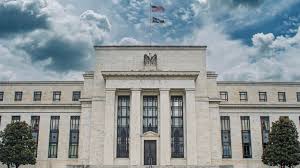
At his April 21 Senate confirmation hearing, Warsh called for "a regime change in the conduct of policy" at the Fed under former chair Jerome Powell, whose tenure saw annual inflation exceed 8 percent during the Biden administration and has failed since 2021 to keep inflation below its target.
"Once you let inflation take hold in the economy, it's more expensive and harder to bring it down, and so the fatal policy error going back four or five years is still a legacy that we're dealing with," Warsh stated. "Hard-working Americans are no doubt feeling it."
Americans are suffering as price increases outpace wages. And as of April, the inflation rate of 3.8 percent remains persistently above the 2 percent target set by the Federal Reserve.
What is the new Fed chair's plan to get inflation under control? Analysts predict that he will bring a different approach, which will include reducing the Fed's massive $6.8 trillion bond holdings, prioritizing interest-rate actions over quantitative easing, and focusing on the money supply over other metrics.
"Warsh is likely going to pursue a smaller Fed balance sheet and try to use this 'tightening' as a bargaining chip to get the Federal Open Market Committee to lower short-term rates," Chris Whalen, investment banker and former Fed staffer, told The Epoch Times. "His comments on the disaster of quantitative easing are quite clear."
The Legacy of Cheap Dollars
Except for a brief interlude during President Donald Trump's first term, the Fed has pursued a cheap-money strategy since the mortgage crisis of 2008–09, keeping its benchmark short-term interest rate—the federal funds rate—near zero, and only raising rates in 2022 when inflation was approaching double digits. Simultaneously, the Fed pursued an experimental policy called quantitative easing (QE), in which it created money to buy bonds from money-center banks, flooding the U.S. economy with dollars.
Between 2008 and 2022, the Fed accumulated $8 trillion in new financial assets on its balance sheet, effectively transforming it into one of the world's largest asset managers and the largest single owner of U.S. Treasuries. Warsh has been an outspoken critic of quantitative easing, leading many economists to predict he will try to reverse this policy and shrink the Fed's balance sheet.
During his confirmation hearing, he stated that "the Fed has an interest rate tool and a balance sheet tool … The balance sheet tool disproportionately helps those with financial assets; the interest rate tool hits the entire economy."
While QE and low interest rates boosted demand in the wake of the mortgage collapse and pandemic lockdowns, they also drove up asset prices—notably stocks, bonds, and houses—to the benefit of wealthier Americans. Simultaneously, living standards fell for many Americans, whose dollars have lost more than 20 percent of their value over the past five years.