Breaking News
 32% CROP ABANDONMENT: Serious Warnings from the Breadbasket
 Eminent Domain is Coming for Your Home | DarkHorse 326
 How Joel Salatin Healed His Chickens: "It Was Like Magic!"
 Time To Retire The Empire -- Foreign Governments Are Dumping Treasuries
Top Tech News
 Cars Are Fast Becoming Dystopian Prison Pods...
 Our Emergency Water Plan Wasn't Good Enough - So We Built This
 Sodium Ion Batteries Can Reach 100 Gigawatt Per Hour Per Year Scale in 2027
 Juiced Bikes proves capable electric motorcycles don't have to cost a lot
 Headlight projectors turn your car into a drive-in theater
 US To Develop Small Modular Nuclear Reactors For Commercial Shipping
 New York Mandates Kill Switch and Surveillance Software in Your 3D Printer ...
 Cameco Sees As Many As 20 AP1000 Nuclear Reactors On The Horizon
 His grandparents had heart disease.
At 11, Laurent Simons decided he wanted to fight aging.
His grandparents had heart disease.
At 11, Laurent Simons decided he wanted to fight aging.
 Mayo Clinic's AI Can Detect Pancreatic Cancer up to 3 Years Before Diagnosis–When Treatment...



The Rise of the Military Retail Industrial Complex

Their reticence may be related to the FRT industry's deep ties to the national security state — leaving consumers' data just a knock away from American intelligence agencies.
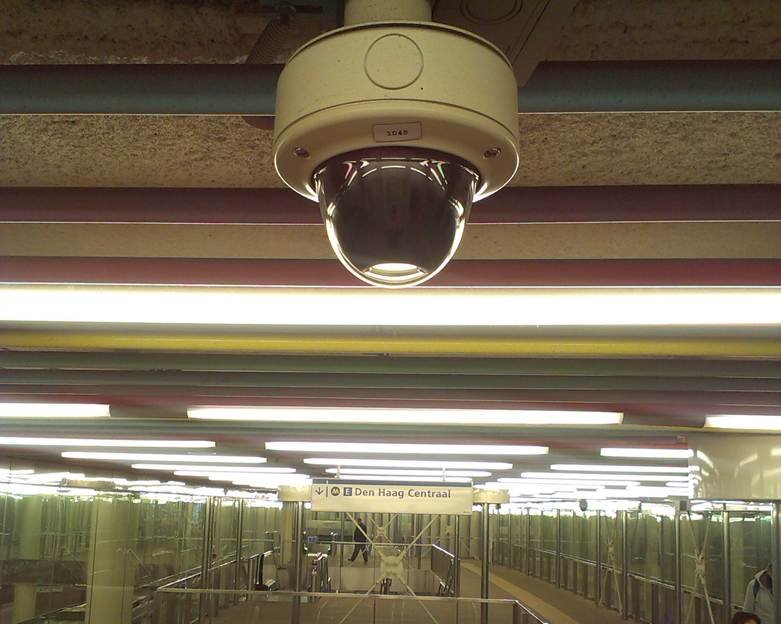
As far back as the 1970s, CCTV cameras have decorated private businesses and public buildings — providing a means of deterring theft for property owners and keeping records of activity through omnipresent VCR and later digital cameras. At its inception, there was virtually no backlash or critique against the new technology's surveillance potential, allowing for a smooth implementation over the years. Now, decades later, it has become ubiquitous. Shoppers accept its existence and, consciously or not, adjust their behavior around it. For almost all, it is not a problem, but a fact of life.
Why, then, was there such an uproar when a popular East Coast supermarket chain revealed they are not only surveilling their customers with CCTV — but using their cameras to collect shoppers' biometric data?